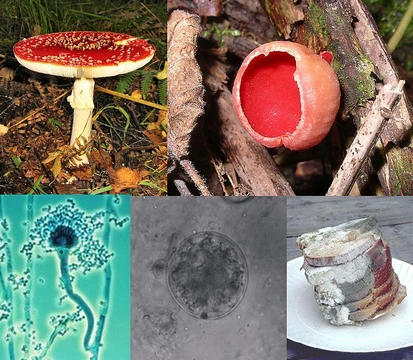
Basidiomycota
One of two major fungal divisions, including mushrooms, rusts, and smuts.

Malena Lorente · CC BY-SA 4.0
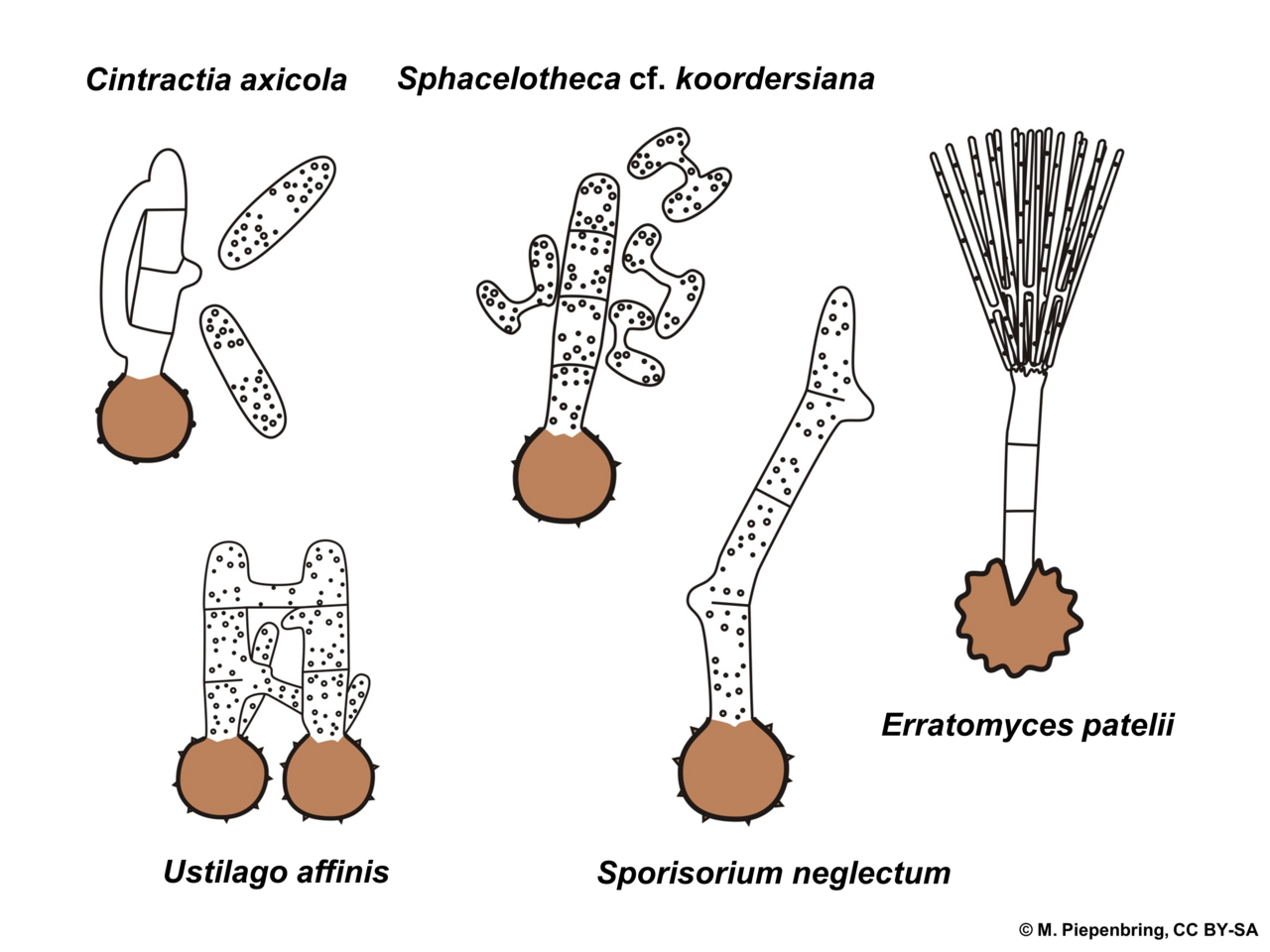
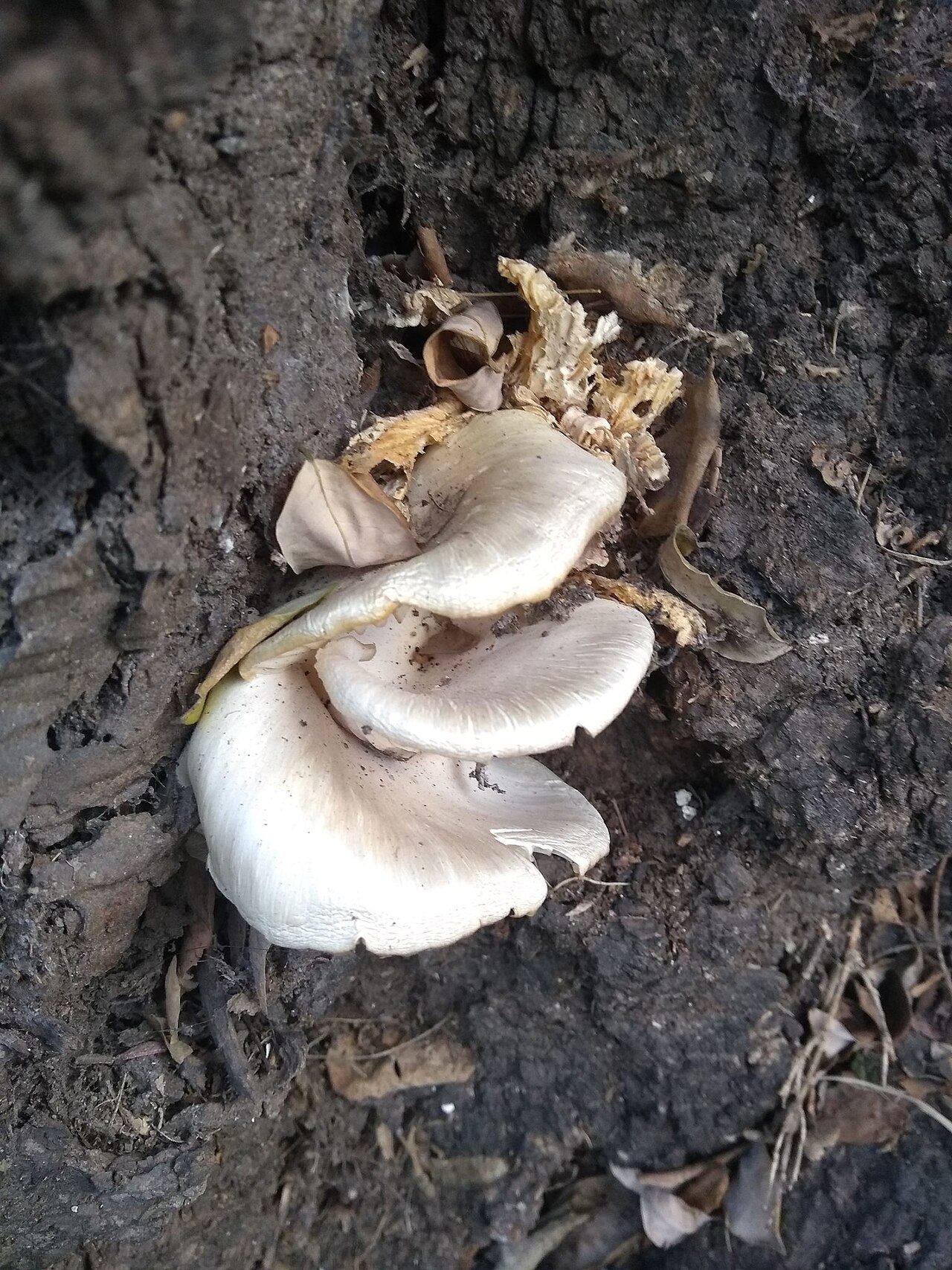
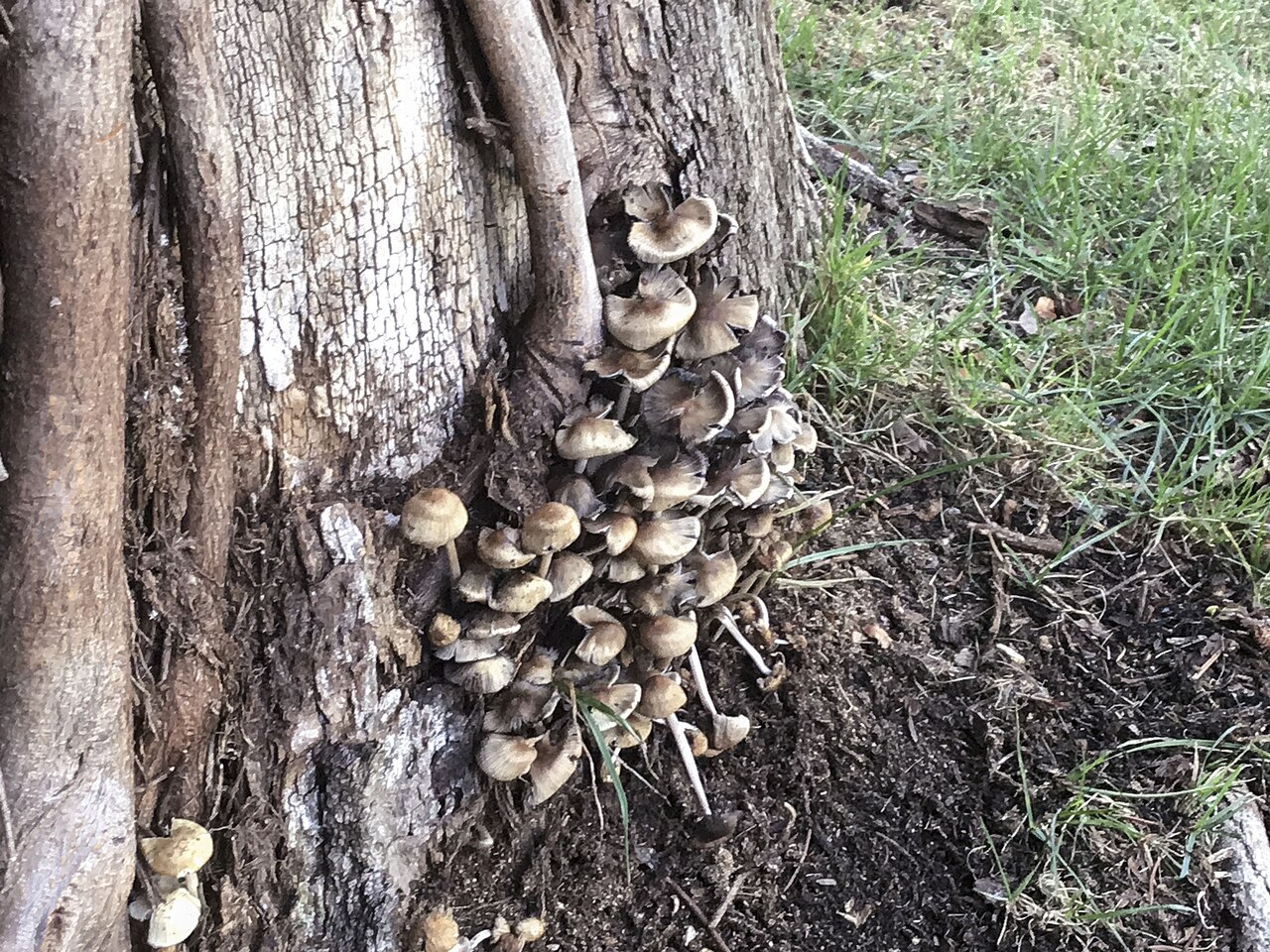
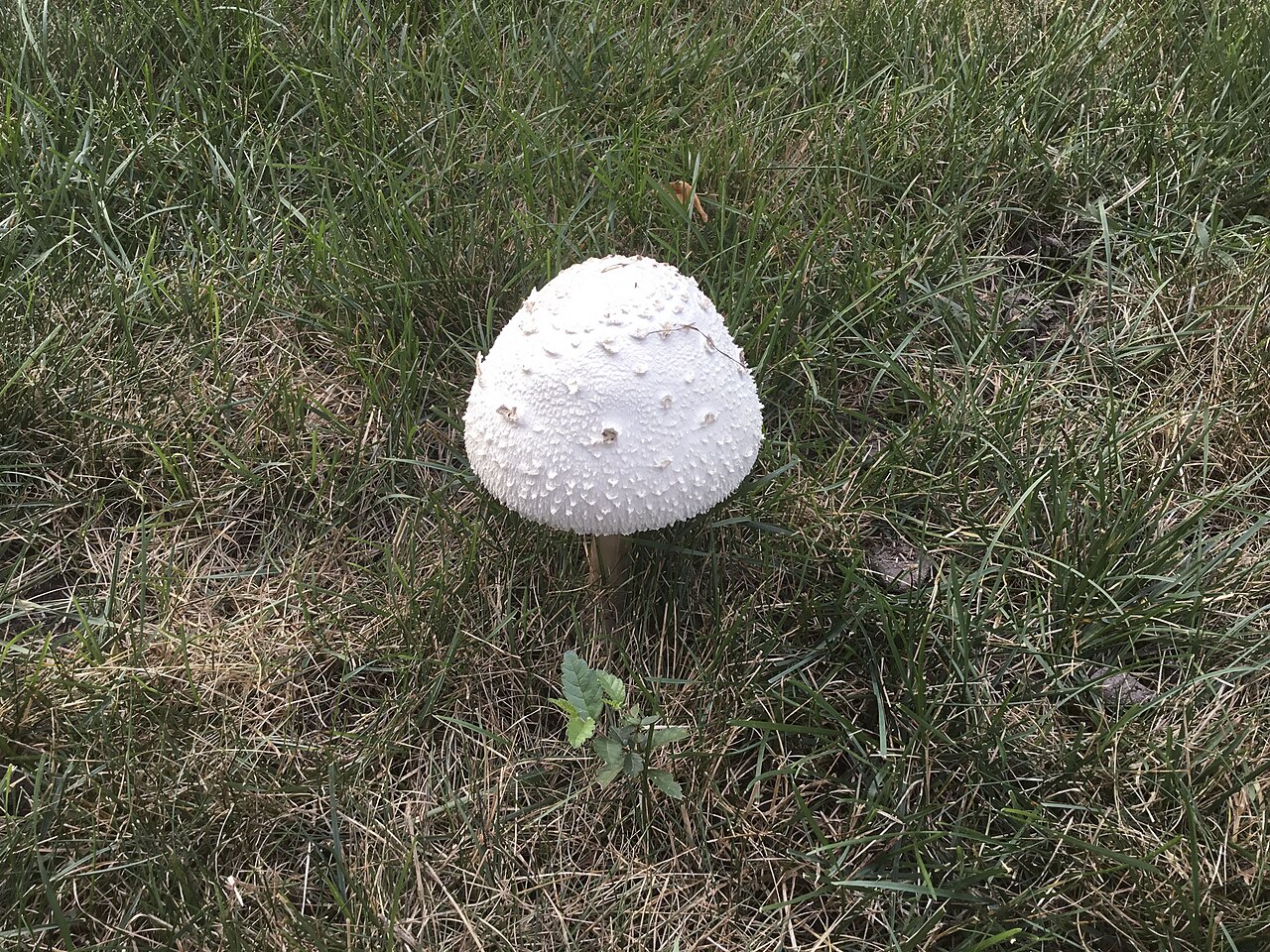
Basidiomycota is one of the two major divisions within the subkingdom Dikarya—the so-called "higher fungi"—alongside Ascomycota. Its members are called basidiomycetes. This group includes a wide variety of familiar fungi: agarics, puffballs, stinkhorns, bracket fungi and other polypores, jelly fungi, boletes, chanterelles, earth stars, smuts, bunts, rusts, mirror yeasts, and the human pathogen *Cryptococcus*.
These fungi are typically filamentous, made up of hyphae (except for the yeast forms). They reproduce sexually through specialized, club-shaped cells at the ends of hyphae called basidia, which usually produce four external meiospores known as basidiospores. Some Basidiomycota, however, reproduce only asexually. Asexual species can often be identified as basidiomycetes by their overall resemblance to known members, by the presence of clamp connections, by the composition of their cell walls, or definitively through phylogenetic DNA analysis.
**Classification**
A widely accepted classification from 2007, developed by a coalition of 67 mycologists, placed Basidiomycota into three subphyla—Pucciniomycotina, Ustilaginomycotina, and Agaricomycotina—plus two additional class-level groups (Wallemiomycetes and Entorrhizomycetes) that fall outside these subphyla. These subphyla both combine and cut across older, now-obsolete taxonomic groups. An estimate from 2008 counted 3 subphyla (including 6 unassigned classes), 16 classes, 52 orders, 177 families, 1,589 genera, and 31,515 species.
An updated classification by Wijayawardene et al. in 2020 recognized 19 classes: Agaricomycetes, Agaricostilbomycetes, Atractiellomycetes, Bartheletiomycetes, Classiculomycetes, Cryptomycocolacomycetes, Cystobasidiomycetes, Dacrymycetes, Exobasidiomycetes, Malasseziomycetes, Microbotryomycetes, Mixiomycetes, Monilielliomycetes, Pucciniomycetes, Spiculogloeomycetes, Tremellomycetes, Tritirachiomycetes, Ustilaginomycetes, and Wallemiomycetes, each containing multiple orders and genera.
Traditionally, Basidiomycota were split into two now-obsolete classes: Homobasidiomycetes (or holobasidiomycetes), which included true mushrooms, and Heterobasidiomycetes, which included jelly, rust, and smut fungi. These old categories are still used informally to describe two growth habits: "mushrooms" (like *Schizophyllum commune*) and non-mushrooms (like *Mycosarcoma maydis*).
**Agaricomycot
- division
- Basidiomycota
- subkingdom
- Dikarya
- kingdom
- Fungi
- estimated species (2008)
- 31,515
- classes (2020 update)
- 19
- orders (2008)
- 52
- families (2008)
- 177
Lore & Background
Basidiomycota are characterized by a life cycle that involves haploid mycelia (monokaryons) that fuse via plasmogamy, leading to a dikaryotic stage where compatible nuclei remain paired. The dikaryon is long-lived and can last years, decades, or centuries. Eventually, basidia form, in which karyogamy occurs, followed by meiosis, producing four haploid nuclei that migrate into external basidiospores. These spores are typically ballistic and disperse to start new haploid mycelia. The maintenance of the dikaryotic status is often facilitated by clamp connections.
Reader's Guide
Basidiomycota are significant as one of the two major divisions of higher fungi, encompassing a vast diversity of forms including edible mushrooms, plant pathogens like rusts and smuts, and human pathogens such as Cryptococcus neoformans. Their classification has evolved from two obsolete classes (Homobasidiomycetes and Heterobasidiomycetes) to a modern system recognizing three subphyla (Agaricomycotina, Pucciniomycotina, Ustilaginomycotina) and additional class-level taxa. The 2007 classification by 67 mycologists and the 2020 update by Wijayawardene et al. reflect ongoing refinement. The study of meiosis in Coprinopsis cinerea has shown conserved gene expression patterns across fungi over half a billion years. Basidiomycota also include species that are obligate asexual reproducers, and their identification often relies on DNA sequence analysis.
Did You Know?
- Basidiomycota reproduce sexually via specialized club-shaped end cells called basidia that normally bear four external basidiospores.
- The dikaryotic mycelium of Basidiomycota can be long-lived, lasting years, decades, or centuries.
- Coprinopsis cinerea is a basidiomycete mushroom particularly suited to the study of meiosis because meiosis progresses synchronously in about 10 million cells within the mushroom cap.
- Some Basidiomycota are obligate asexual reproducers and can be recognized by clamp connections or phylogenetic DNA analysis.
Ecological Reach and Taxonomic Distribution
Entomopathogenic fungi occupy a remarkable niche in natural ecosystems, serving as a biological check on insect populations across an astonishing breadth of taxa. These parasitic microorganisms, whether unicellular or multicellular, impact nineteen of the thirty known insect orders, making them among the most widespread natural regulators of invertebrate communities. Their pathogenicity is not confined to a single lineage; rather, it is distributed across eight fungal phyla following recent genomic reclassifications that reshaped the kingdom. Among these, Microsporidia and Ascomycota each infect thirteen insect orders, while Entomophthoromycota reaches ten. Basidiomycota, the phylum often recognized for its well-developed septate hyphae and visible fruiting bodies such as mushrooms and puffballs, contributes to this ecological service by targeting two insect orders. The spectrum of host relationships ranges from opportunistic, non-specific infections to exquisitely specialized parasitism, reflecting the deep evolutionary history of the fungal-insect interaction.
The Mechanics of Infection
What distinguishes most entomopathogenic fungi from other insect pathogens such as viruses, nematodes, or bacteria is their direct assault on the insect exoskeleton rather than any reliance on ingestion. A microscopic spore, typically asexual and often a conidium, lands on the host surface and uses hydrophobins and adhesins to recognize and bind to the cuticle. Once environmental conditions of temperature and humidity trigger germination, filamentous fungi extend hyphae across the surface and may form appressoria, specialized structures that apply mechanical force onto the cuticle to support pathogen entry. The actual breach of the exoskeleton is accomplished through enzymatic hydrolysis, a chemical boring process driven by lytic enzymes. Once the infection reaches the hemocoel, fungal cells proliferate either as walled hyphae or as wall-less protoplasts, depending on the species involved. The full virulence toolkit thus encompasses adhesins for attachment, lytic enzymes for cuticle degradation, and secondary metabolites that further undermine host defenses.
Life Cycle and Environmental Strategy
The reproductive and dispersal biology of entomopathogenic fungi is tightly coupled to environmental conditions. After killing their host, most of these fungi emerge from the cadaver and produce spores on the external surface, though elevated humidity can shift sporulation to internal surfaces of the dead insect. Some species go a step further, anchoring the corpse to surrounding foliage with structures called rhizoids, effectively positioning the spore-producing body in a microenvironment where new hosts are most likely to encounter it. Germination of those spores is not random; it is gated by specific temperature and humidity thresholds, ensuring the fungus invests energy in infection only when conditions favor successful colonization. The life cycles themselves show considerable diversity, varying not only between phyla and species but even among isolates within a single species. Whether a fungus is a broad-spectrum generalist or a narrow specialist, the fundamental sequence of spore dispersal, attachment, penetration, proliferation, and re-sporulation remains the unifying thread of its biology.
Specialists, Generalists, and Behavioral Manipulation
Entomopathogenic fungi span a remarkable spectrum of host strategy. Generalist species, such as Metarhizium robertsii, tend to act quickly, deploying various toxins to kill a wide range of insect hosts and then growing saprophytically on the cadaver, digesting it for nutrients. In contrast, host specialists like the Ophiocordyceps genus prolong the parasitic phase, systematically invading host tissues while keeping the insect alive longer. The most extreme example of this specialization is Ophiocordyceps unilateralis, the so-called zombie ant fungus, which has evolved the ability to hijack the insect nervous system using secondary metabolites. The manipulated ant is driven to leave its nest and move to a location where environmental conditions better suit fungal growth and sporulation. Upon the ant's death, the fungus produces a stalk-like structure erupting from the head, releasing spores into the surrounding forest. The cumulative effect is the formation of high-density clusters of dead ants on the forest floor, colloquially known as graveyards, a striking testament to the power of fungal behavioral manipulation.
Gallery
Frequently Asked Questions
What is Basidiomycota?
Basidiomycota is one of the two principal divisions within the subkingdom Dikarya, the group commonly called the 'higher fungi.' Its members are referred to as basidiomycetes, and the division stands alongside Ascomycota as the other major branch of this subkingdom.
What kinds of fungi belong to Basidiomycota?
The division covers an astonishing range of forms, from familiar mushrooms, boletes, chanterelles, puffballs, stinkhorns, and bracket fungi to less conspicuous organisms like smuts, bunts, rusts, jelly fungi, and mirror yeasts. The human pathogen Cryptococcus is also a member of this group.
How do Basidiomycota reproduce sexually?
Sexual reproduction in basidiomycetes takes place through small, club-shaped cells called basidia that sit at the tips of hyphae. Most members are filamentous and built from hyphae, though yeast-form species are a notable structural exception.
How large is the Basidiomycota division in terms of species and taxonomy?
A 2008 estimate placed the division at roughly 31,515 recognized species spread across 52 orders. A 2020 taxonomic update expanded the number of recognized classes to 19.
Why is Basidiomycota considered important?
As one of only two major divisions of the 'higher fungi,' Basidiomycota includes organisms that play critical roles as decomposers (polypores, jelly fungi), agricultural pests (rusts, smuts, bunts), and human pathogens (Cryptococcus). Its sheer diversity and ecological reach make it central to both natural ecosystems and human health.
More in Fungi And Fungus-Like Organisms 1-24
Spotted an error? Know more?
This is a living reference — every entry is fact-audited, and reader corrections feed straight into our audit queue. Suggest an edit · See this site's audit record