Boletus edulis
Edible basidiomycete fungus, type species of genus Boletus.

Thomas Fuhrmann · CC BY-SA 4.0
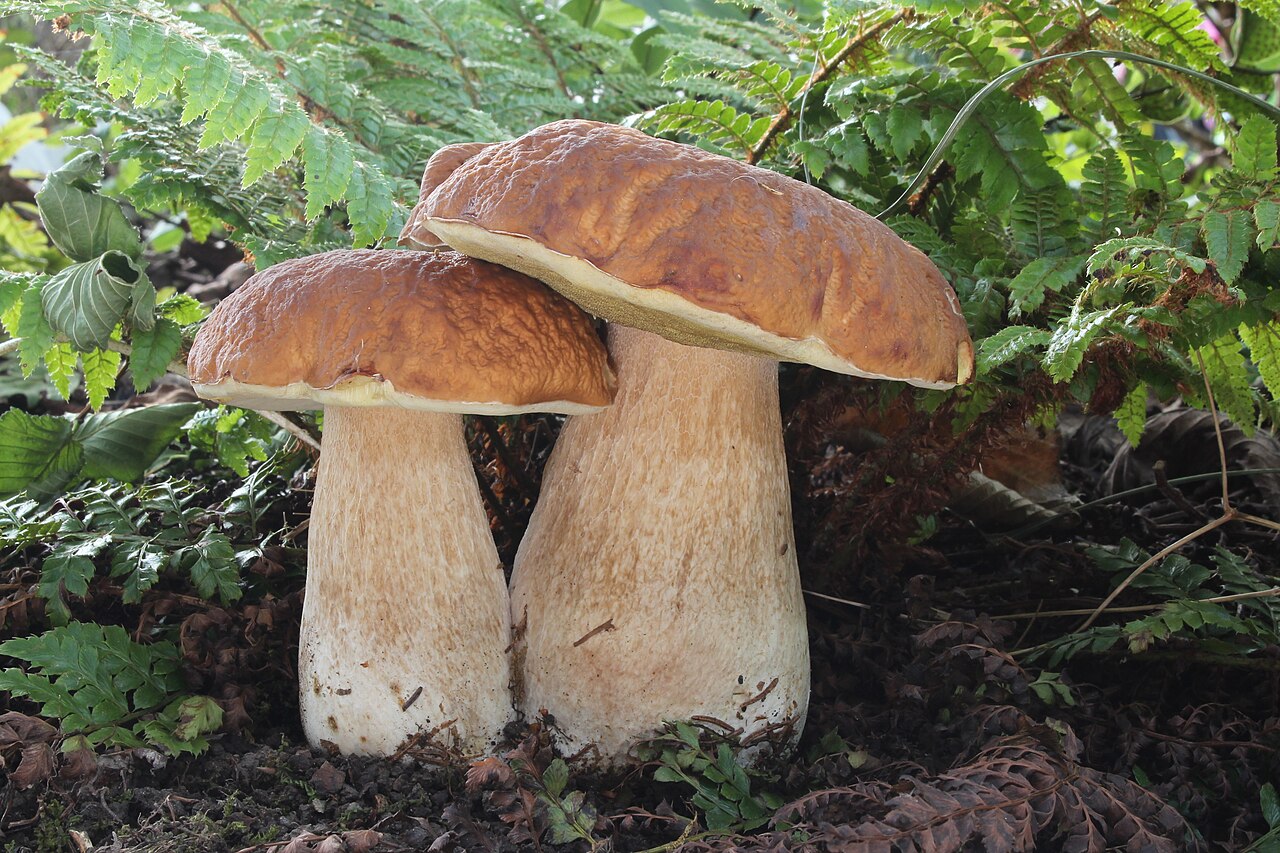
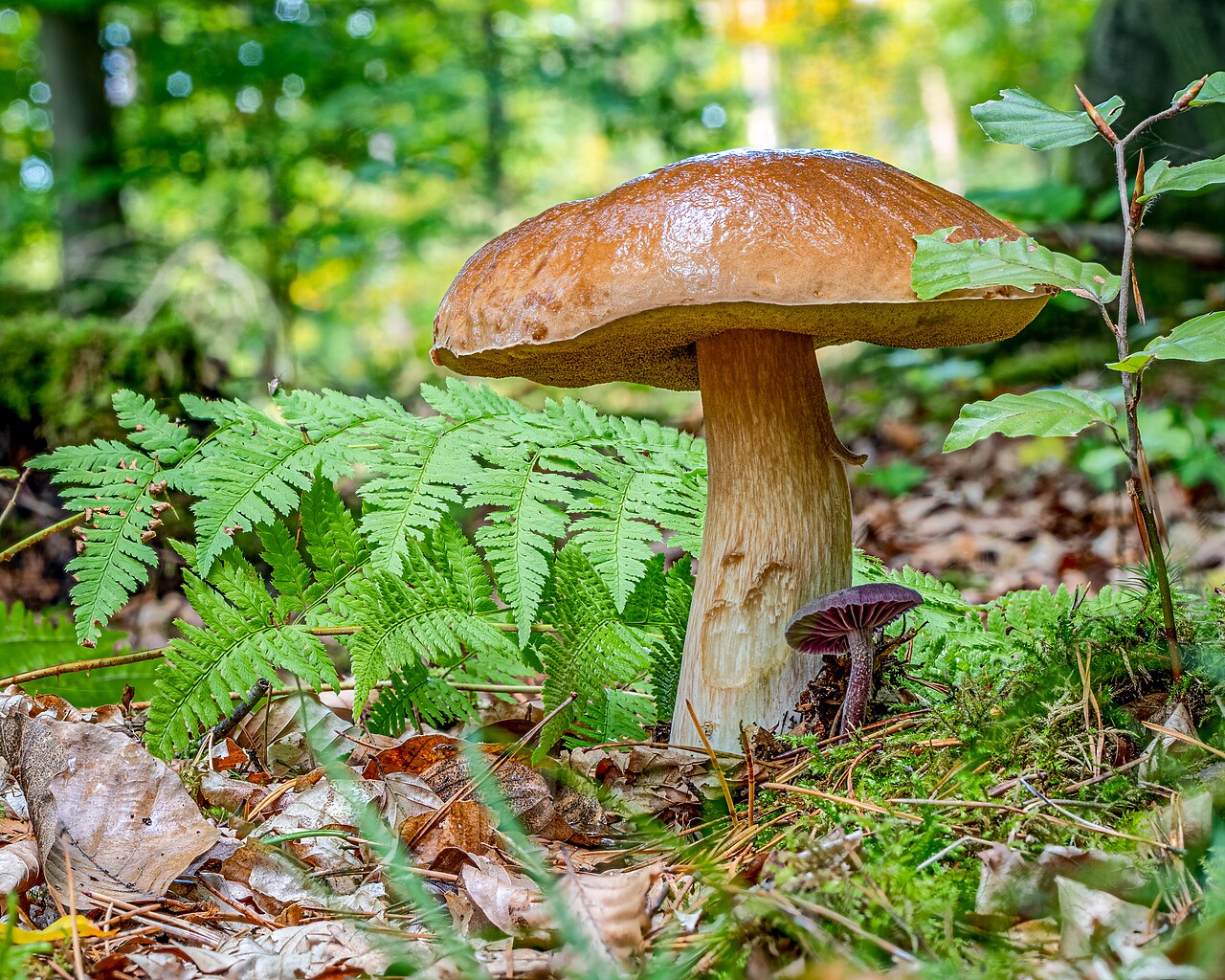
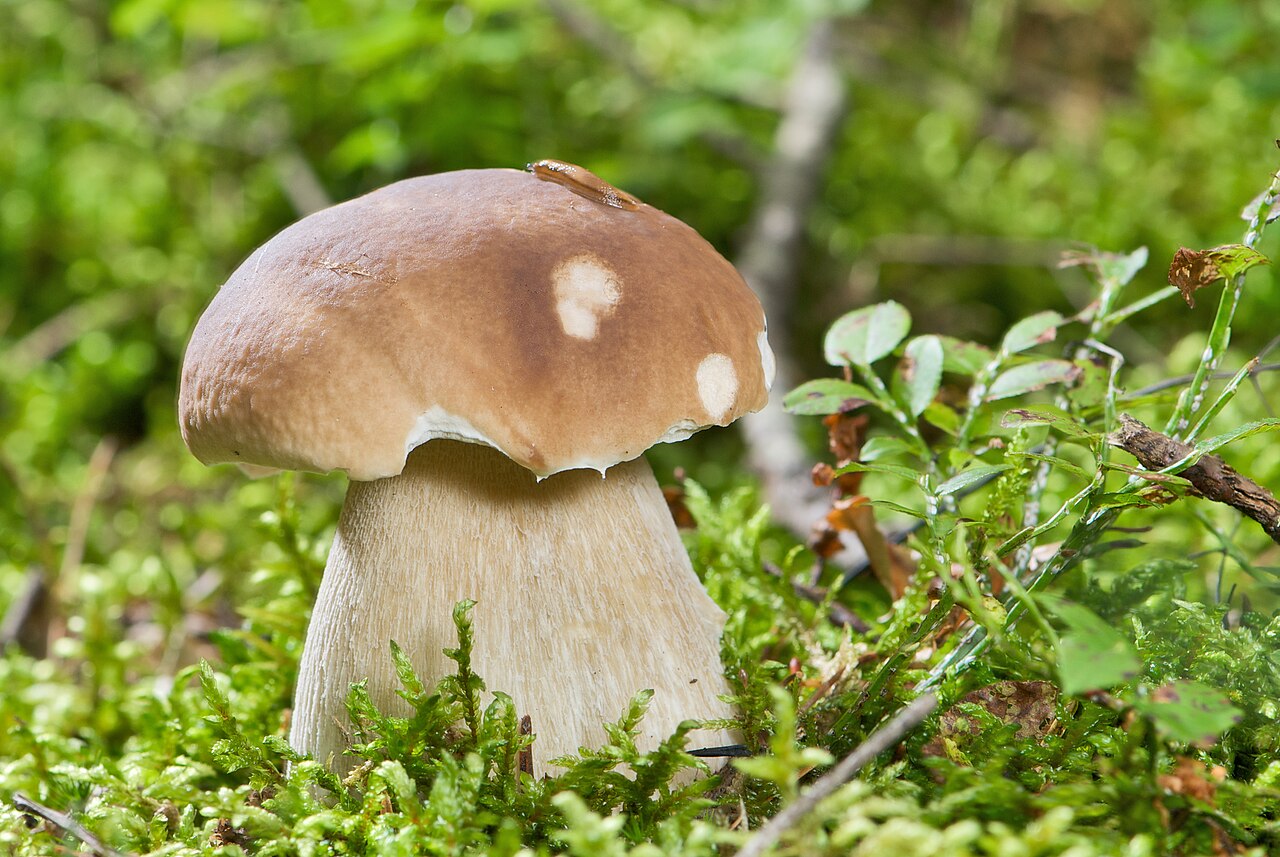
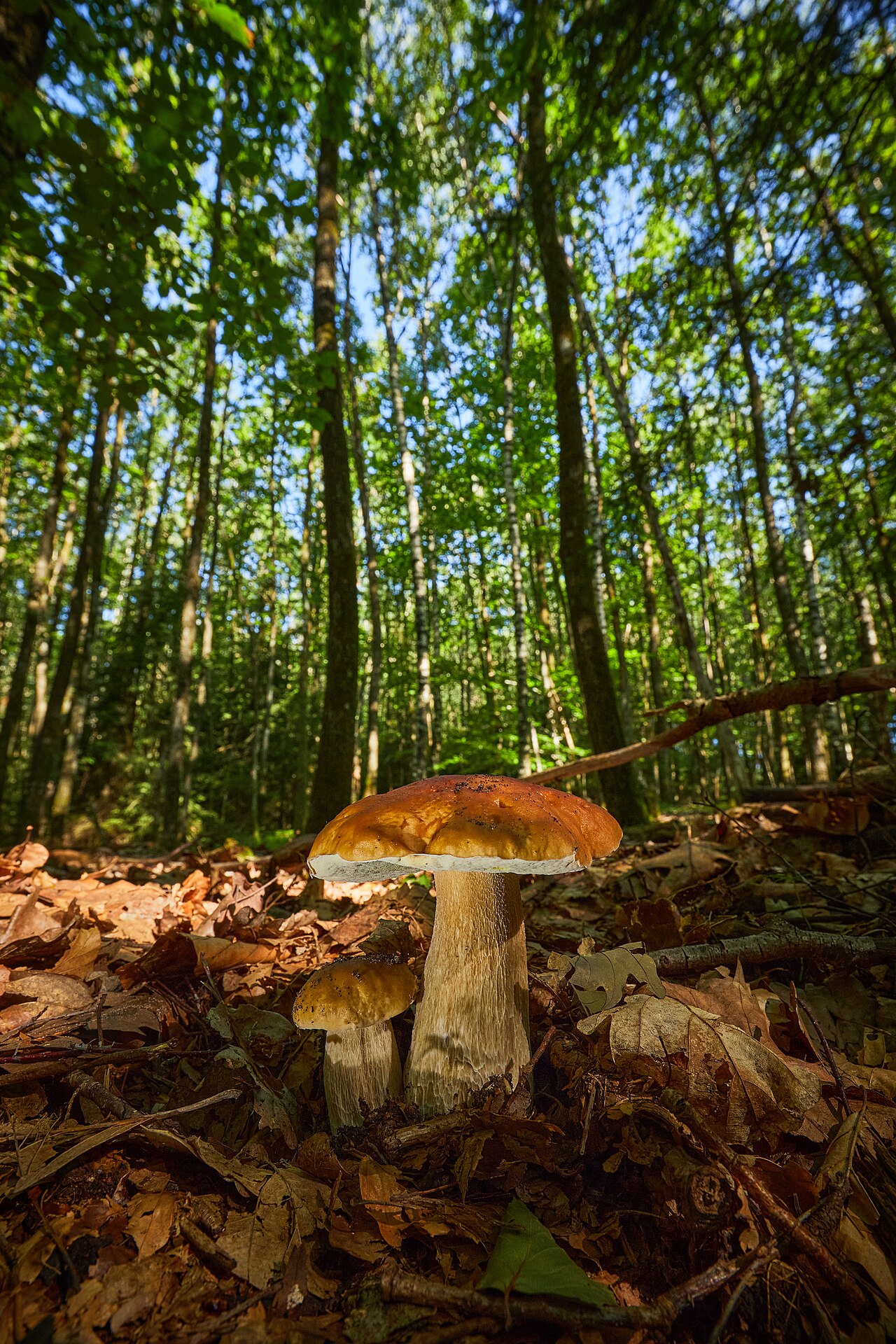
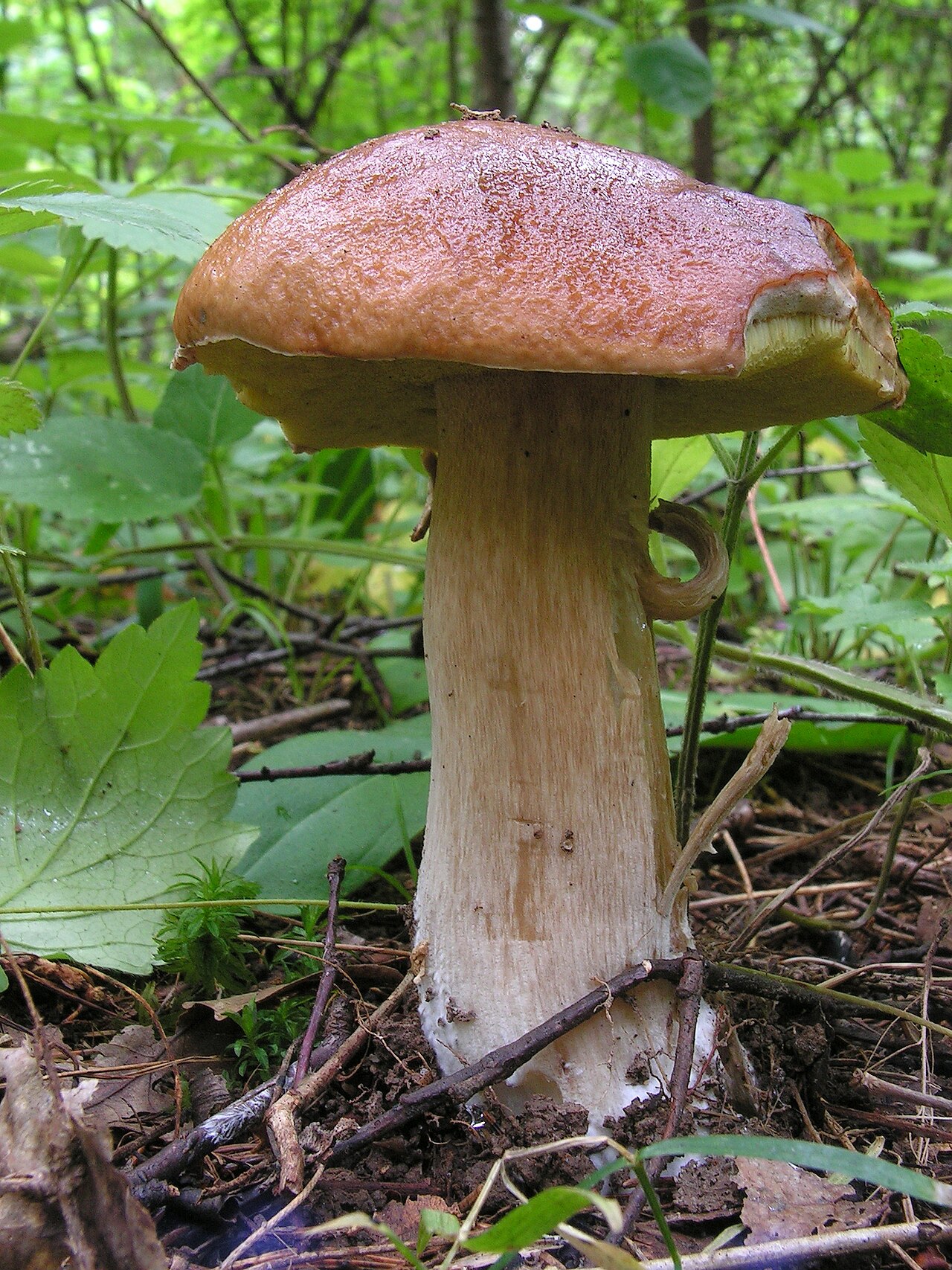
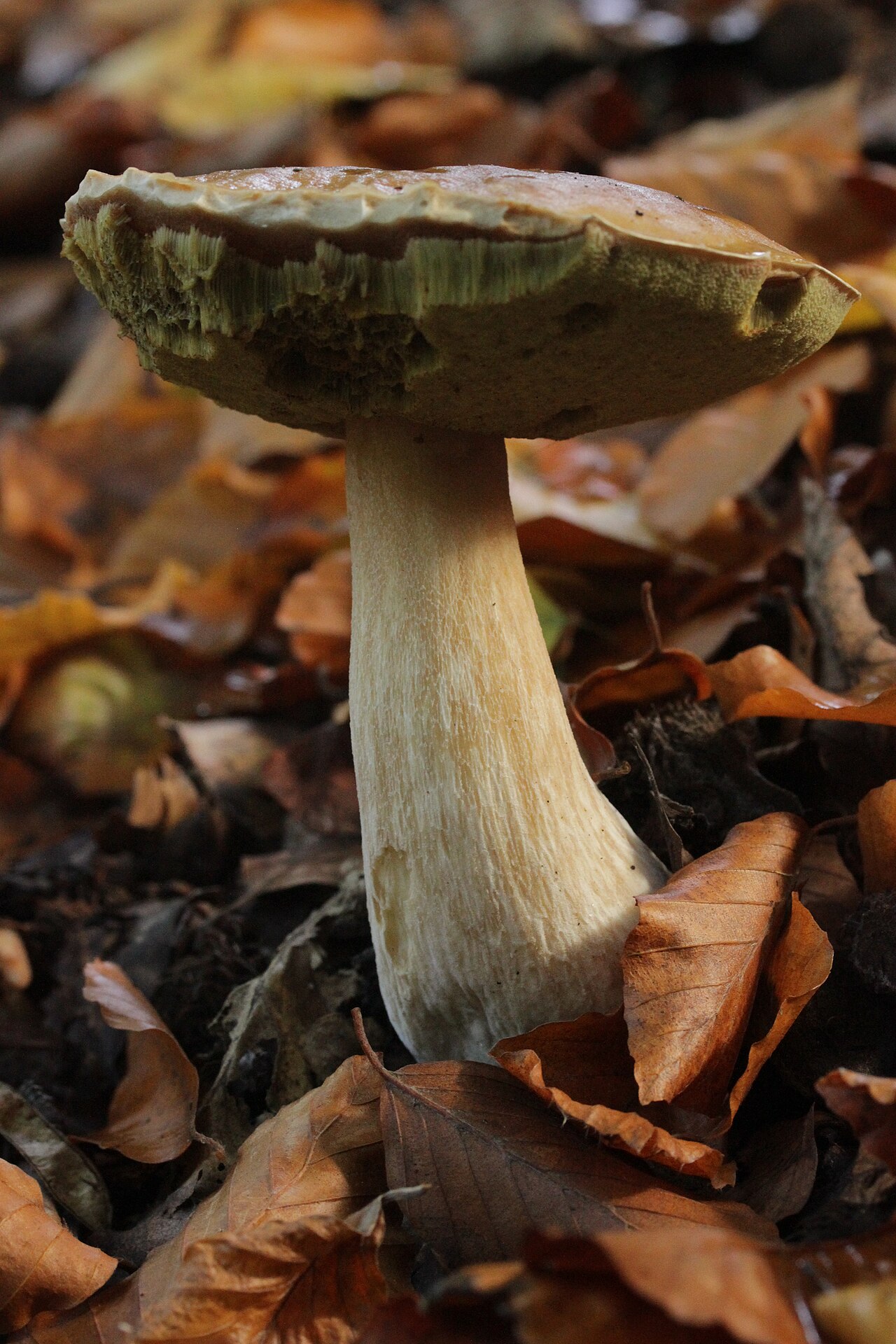
**Boletus edulis** (also called cep, penny bun, or porcino) is a prized edible fungus and the type species of the *Boletus* genus. It belongs to the basidiomycete group. Above ground in summer and autumn, it produces spore-bearing fruit bodies with a large brown cap that can reach 42 cm across and weigh up to 3.2 kg. Like other boletes, it has tubes—not gills—on the underside of the cap; spores escape through the tube openings (pores). The pore surface starts whitish in young specimens and turns olive-brown to yellowish-olive as it ages. The stout stem (stipe) is white or yellowish, up to 25 cm tall and 7 cm thick, and partly covered with a raised, net-like pattern (reticulations).
This fungus grows in deciduous and coniferous forests and tree plantations, forming symbiotic ectomycorrhizal relationships with living trees by wrapping sheaths of fungal tissue around their underground roots. It is widely distributed across the Northern Hemisphere in Eurasia and North America. It does not occur naturally in the Southern Hemisphere but has been introduced there. Several closely related European mushrooms once thought to be varieties of *B. edulis* have been shown by molecular phylogenetic analysis to be distinct species, while others previously classified separately are actually the same species. The western North American form known as the California king bolete (*B. edulis* var. *grandedulis*) is a larger, darker variant first formally identified in 2007.
*B. edulis* is highly valued in many cuisines and commonly used in soups, pasta, or risotto. It is low in fat and digestible carbohydrates but high in protein, vitamins, minerals, and dietary fibre. Although sold commercially, it is very difficult to cultivate. Fresh mushrooms are available in autumn throughout Europe and Russia, but they are most often dried, packaged, and distributed worldwide. Drying preserves their flavour, and they are reconstituted for cooking. It is also one of the few fungi sold pickled.
**Taxonomy**
French botanist Pierre Bulliard first described *Boletus edulis* in 1782, and it still bears that original name. Because fungal taxonomy originally set January 1, 1821, as the starting date (coinciding with the works of Swedish naturalist Elias Magnus Fries, the "father of mycology"), Bulliard's name needed Fries' sanction to be valid, so it was written *Boletus edulis* Bull.:Fr. A 198
- cap diameter
- up to 42 cm (16.5 in)
- weight
- up to 3.2 kg (7 lb 1 oz)
Lore & Background
Boletus edulis was first described in 1782 by French botanist Pierre Bulliard and still bears its original name. The starting date of fungal taxonomy was later set to 1821, requiring sanction by Elias Magnus Fries, so the name was written Boletus edulis Bull.:Fr. A 1987 revision of the International Code of Botanical Nomenclature set the starting date to 1753, removing the need for Fries' ratification. Early alternate names include Boletus solidus by James Sowerby in 1809 and Gray's Leccinum edule, though Gray's transfer was later determined inconsistent with botanical nomenclature rules. The generic name derives from Latin bōlētus 'mushroom', from Ancient Greek βωλίτης, ultimately from bōlos 'lump'; the specific epithet edulis means 'eatable' or 'edible'.
Reader's Guide
Boletus edulis is held in high regard in many cuisines and is commonly prepared in soups, pasta, or risotto. It is low in fat and digestible carbohydrates, high in protein, vitamins, minerals and dietary fibre. Although sold commercially, it is very difficult to cultivate. Available fresh in autumn throughout Europe and Russia, it is most often dried, packaged, and distributed worldwide, keeping its flavour after drying. It is also one of the few fungi sold pickled. The fungus produces spore-bearing fruit bodies above ground in summer and autumn, with a large brown cap up to 30 cm in diameter and 3 kg in weight. The pore surface is whitish when young, aging to greenish-yellow. The stout stipe is white or yellowish, up to 25 cm tall and 7 cm thick, partially covered with a raised network pattern. Several closely related European mushrooms formerly thought to be varieties or forms of B. edulis have been shown using molecular phylogenetic analysis to be distinct species, while others previously classified as separate species are conspecific with B. edulis. The western North American species commonly known as the California king bolete (B. edulis var. grandedulis) is a large, darker-coloured variant first formally identified in 2007.
Did You Know?
- The German name Steinpilz means 'stone mushroom', referring to the species' firm flesh.
- A huge specimen collected on the Isle of Skye, Scotland, in 1995 weighed 3.2 kg (7 lb 1 oz) with a cap 42 cm wide.
- The French-born King Charles XIV John popularised B. edulis in Sweden after 1818, honoured in the local vernacular name Karljohanssvamp.
- The specific epithet edulis in Latin means 'eatable' or 'edible'.
Morphology & Structure
The fruit body of Boletus edulis presents a striking architectural form. The cap, which can span up to 30 centimeters across and weigh as much as 3 kilograms, begins as a convex dome in youth and gradually flattens with maturity. Its surface is typically reddish-brown, occasionally showing a paler edge, and becomes tacky when wet. Beneath the cap, rather than the familiar gills of many mushrooms, this species displays a network of downward-extending tubes. When young, the pore surface is whitish, but it shifts to a greenish-yellow as the mushroom ages. The stout stem, reaching up to 25 centimeters in height and 7 centimeters in thickness, is white or yellowish and bears a distinctive raised net-like pattern called reticulations. Spores are released through the openings at the tips of these tubes once they reach maturity.
Ecology & Geographic Range
Boletus edulis forms a mutualistic partnership with living trees, wrapping their underground roots in sheaths of fungal tissue in a relationship known as ectomycorrhizal association. This symbiosis allows the fungus to thrive in both deciduous and coniferous forests as well as managed tree plantations. Its natural range spans the Northern Hemisphere, covering broad swaths of Eurasia and North America, yet it does not occur natively in the Southern Hemisphere, where it has only been introduced. The species produces its spore-bearing fruit bodies above ground during summer and autumn. In western North America, a particularly large and darker-coloured variant, the California king bolete, was formally identified as a distinct taxon in 2007. Molecular phylogenetic studies have also clarified the species' boundaries: several European mushrooms once lumped together as varieties of B. edulis have been reclassified as separate species, while other previously distinct names have been confirmed as the same organism.
Taxonomy & Cultural Naming
The species was first formally described in 1782 by French botanist Pierre Bulliard, and it retains that original name to this day. Its taxonomic history is complicated by shifting rules: the starting date for valid fungal names was once set at 1821 to align with Elias Magnus Fries' foundational works, meaning Bulliard's earlier name required Fries' sanction, noted in the authority string as "Bull.:Fr." A 1987 revision moved the starting date back to 1753 with Linnaeus' Species Plantarum, removing that requirement. As the type species of the genus Boletus and of section Boletus within Rolf Singer's classification, it anchors a group of roughly 30 related boletes sharing traits like white flesh that does not bruise, a netted stem, and a yellow-brown spore print. Common names reflect deep cultural roots: the Italian "porcino" echoes Roman "suilli" (hog mushrooms), the German "Steinpilz" references its firm texture, the Dutch "eekhoorntjesbrood" means "squirrel's bread," and the Swedish "Karljohanssvamp" honours King Charles XIV John, who cultivated the fungus at Rosersberg Palace after 1818.
Culinary Profile & Commercial Life
In kitchens across Europe and beyond, Boletus edulis commands a revered status, appearing in soups, pasta dishes, and risotto. Nutritionally, the mushroom is low in fat and digestible carbohydrates while offering a rich supply of protein, vitamins, minerals, and dietary fibre. Despite its culinary prestige, the fungus resists artificial cultivation, making wild-harvested specimens the primary source. Fresh cep is available throughout Europe and Russia during autumn, but because of its perishability and the difficulty of farming it, much of what reaches global markets is dried, packaged, and shipped worldwide. The drying process preserves the mushroom's flavour effectively, and reconstituted dried cep is widely used in cooking. It is also one of the few fungi commonly sold in pickled form. The species' combination of limited natural availability, inability to be farmed at scale, and strong flavour profile together sustain its position as a prized ingredient in many culinary traditions.
Gallery
Frequently Asked Questions
Who is Boletus edulis and what are its common names?
Boletus edulis is a celebrated edible mushroom that serves as the type species for the entire Boletus genus. Foragers and cooks know it by several names, including cep, penny bun, and porcino, all referring to the same basidiomycete fungus.
What does Boletus edulis look like up close?
Its broad brown cap can spread to roughly 42 cm and the whole fruiting body may tip the scales at around 3.2 kg. Instead of the familiar gills seen on many mushrooms, the underside is lined with tiny tube openings, and the stout white-to-yellowish stem can grow up to 25 cm tall.
How do you tell a young Boletus edulis from a mature one?
In its youth the pore surface beneath the cap appears pale, almost whitish, giving the mushroom a fresh, clean look. As the specimen ages those pores shift to an olive-brown or yellowish-olive tone, so color is a quick visual cue for maturity.
When and where does Boletus edulis show up?
The fruiting bodies emerge above ground during the summer and autumn months in temperate woodland settings. Because it is a basidiomycete, it completes its reproductive cycle by releasing spores through the tiny openings in those tube structures under the cap.
Why is Boletus edulis considered so important to mycology and cuisine?
As the type species of the Boletus genus, it anchors the entire classification of that group and is the reference point mycologists use when describing new bolete relatives. In the kitchen it is regarded as one of the most prized edible mushrooms, celebrated for its rich flavor and substantial size.
More in Fungi And Fungus-Like Organisms 1-24
Spotted an error? Know more?
This is a living reference — every entry is fact-audited, and reader corrections feed straight into our audit queue. Suggest an edit · See this site's audit record