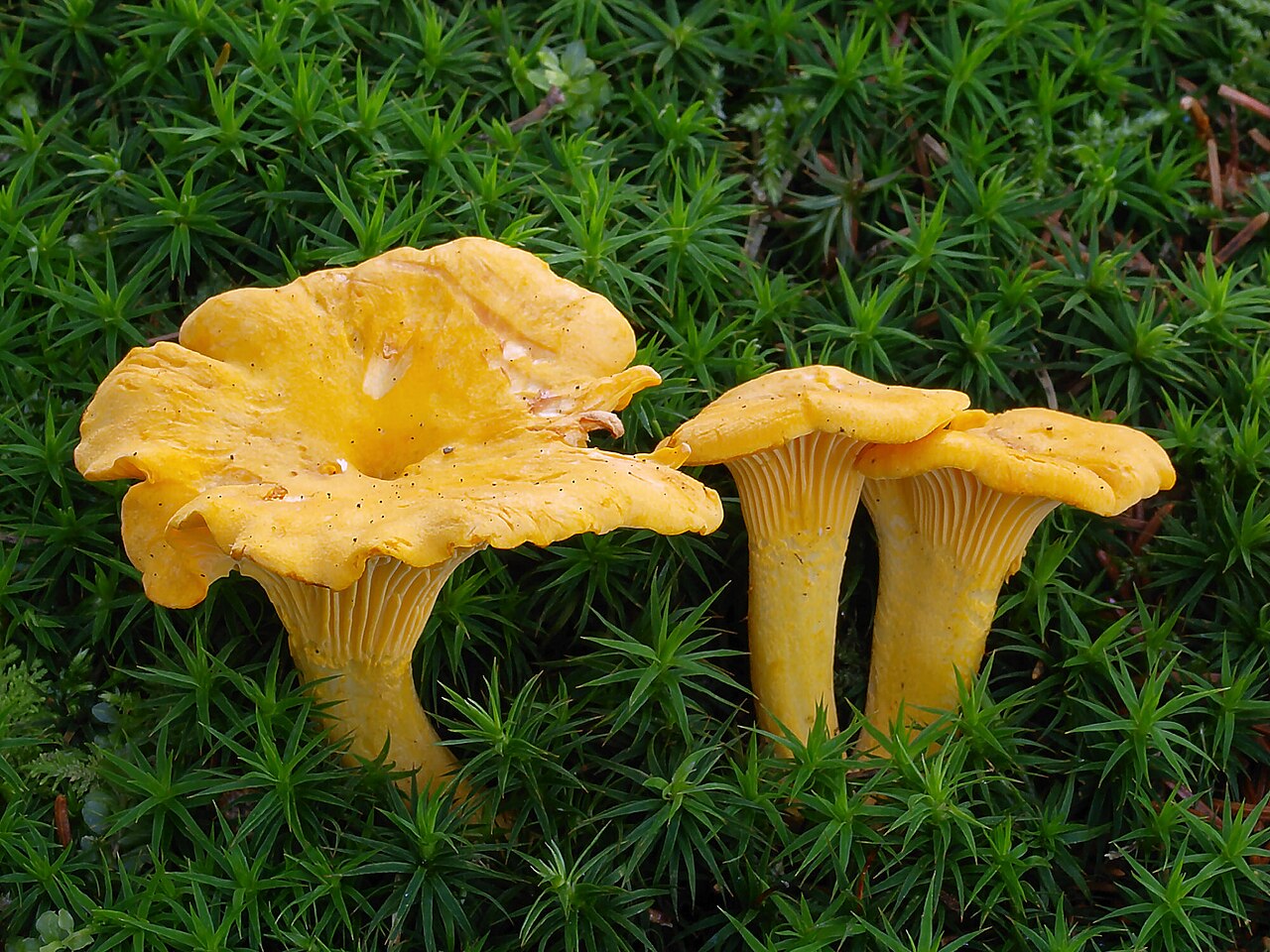
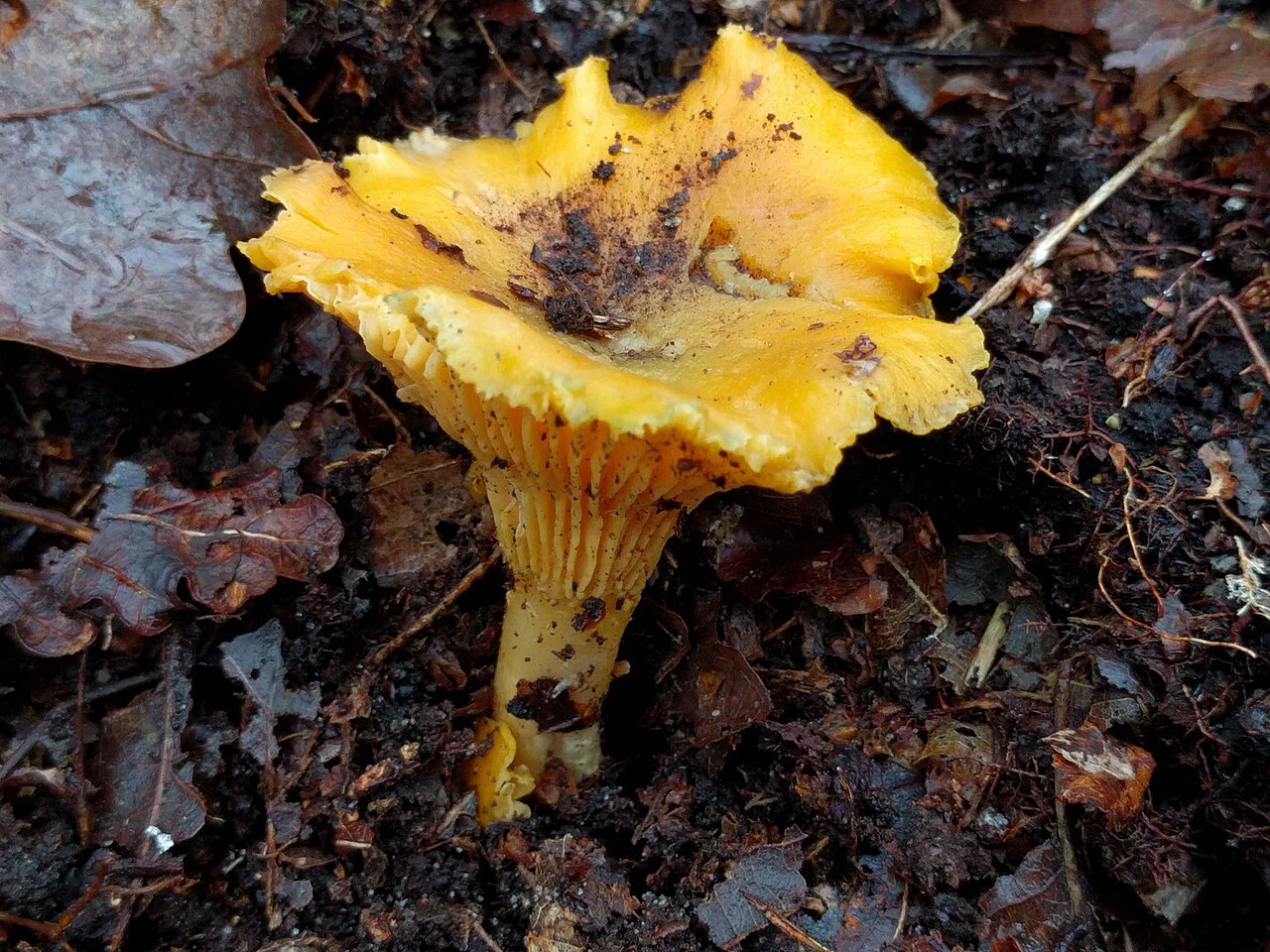
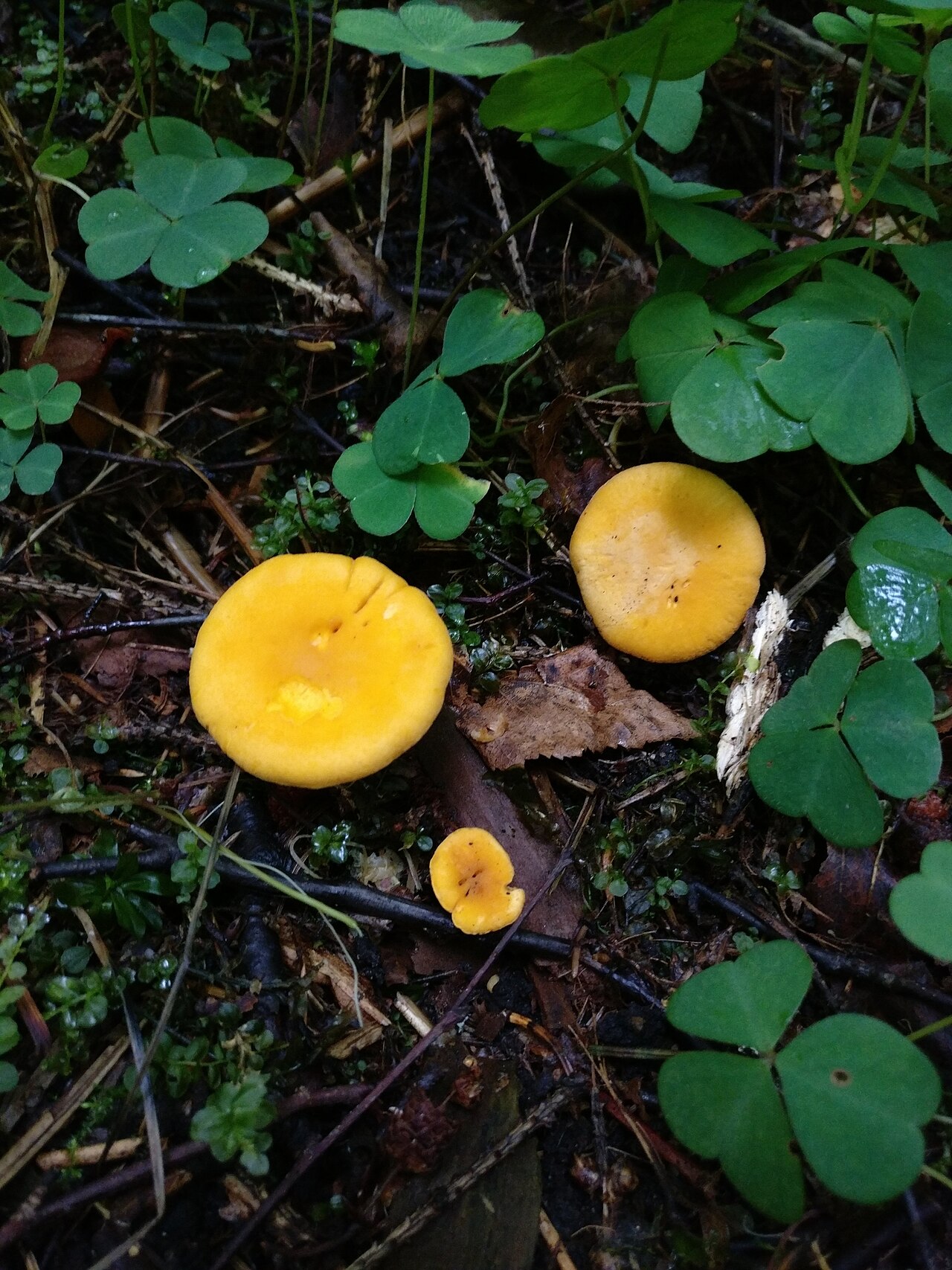
Cantharellus cibarius
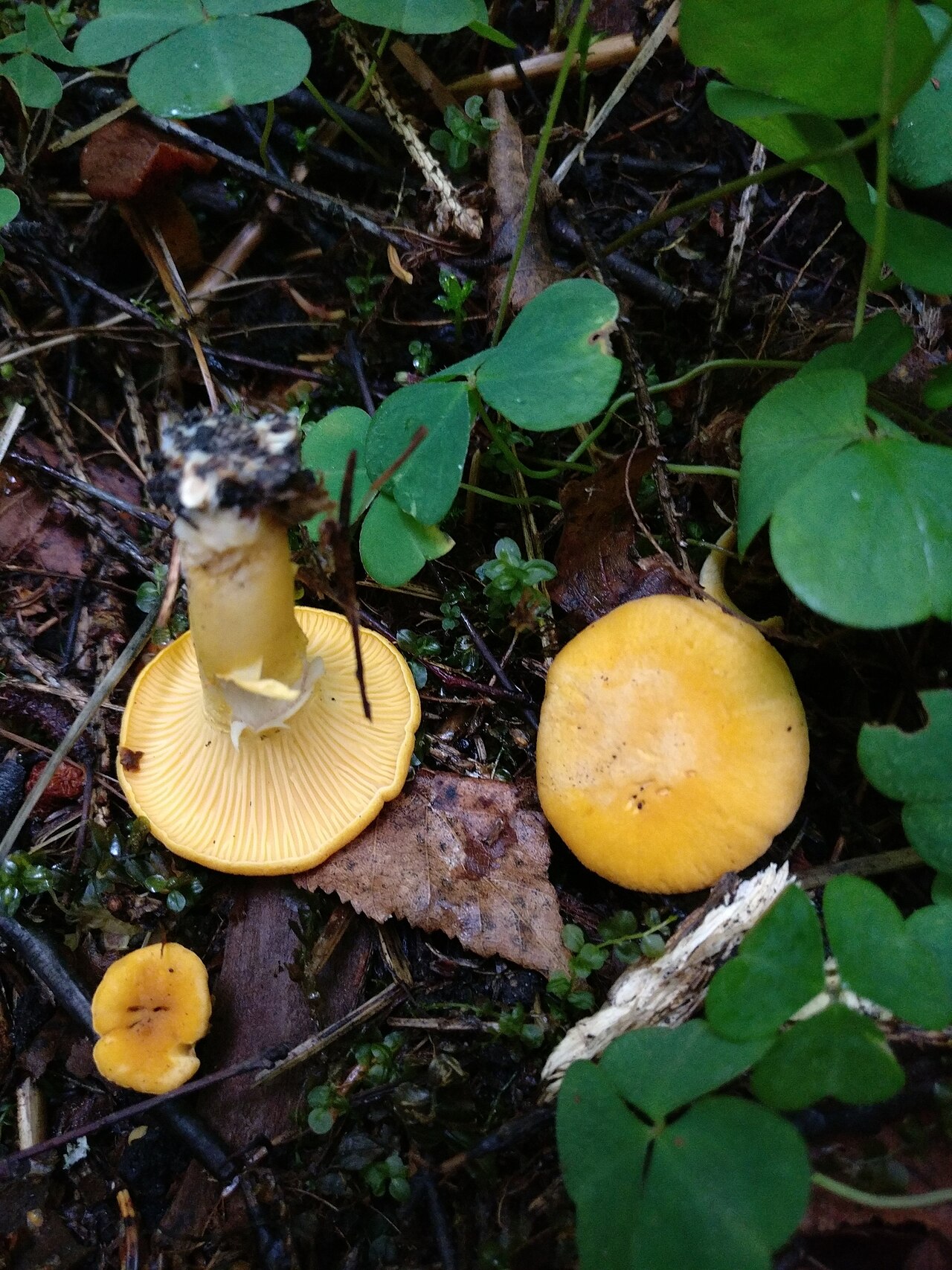
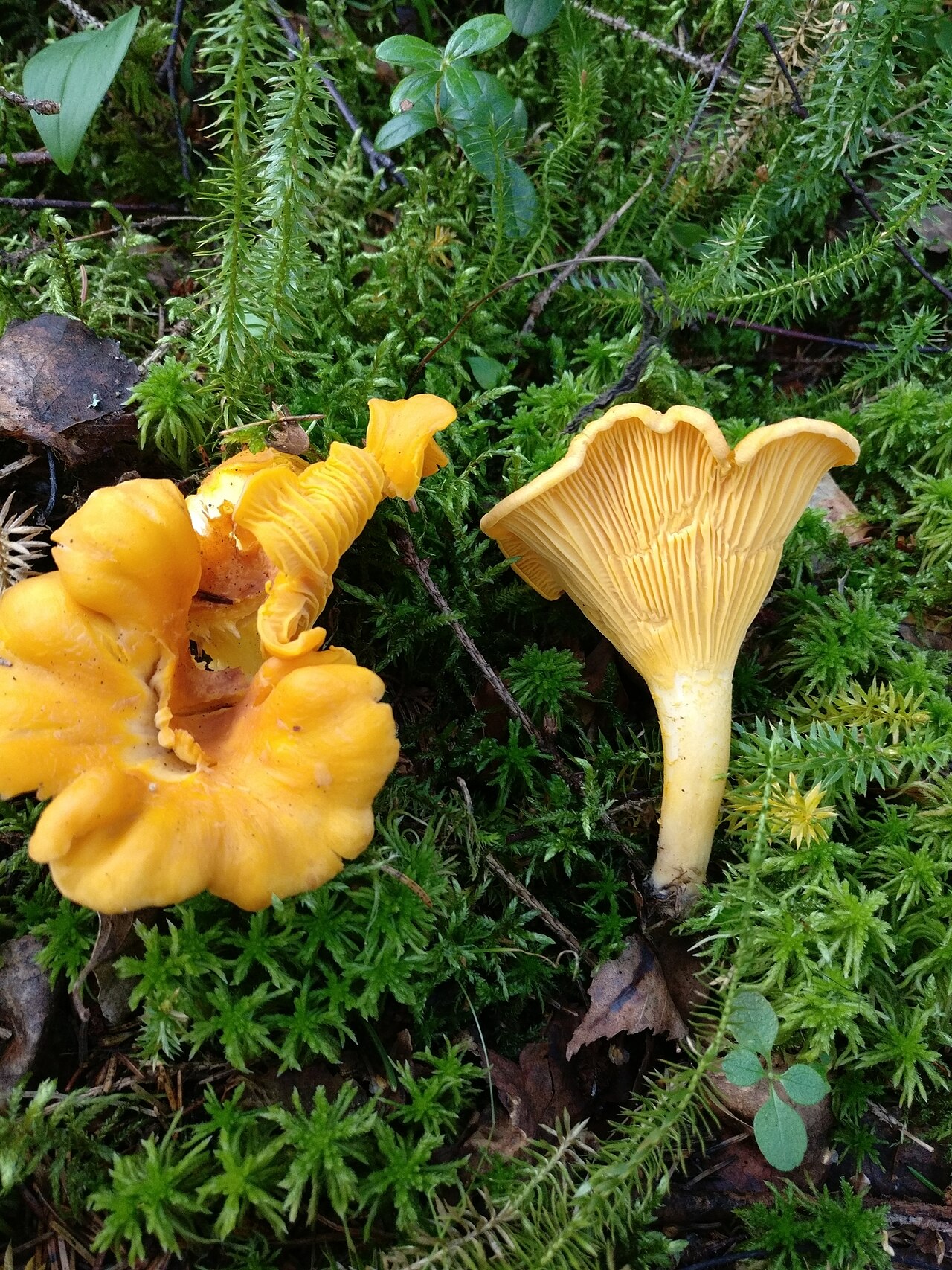
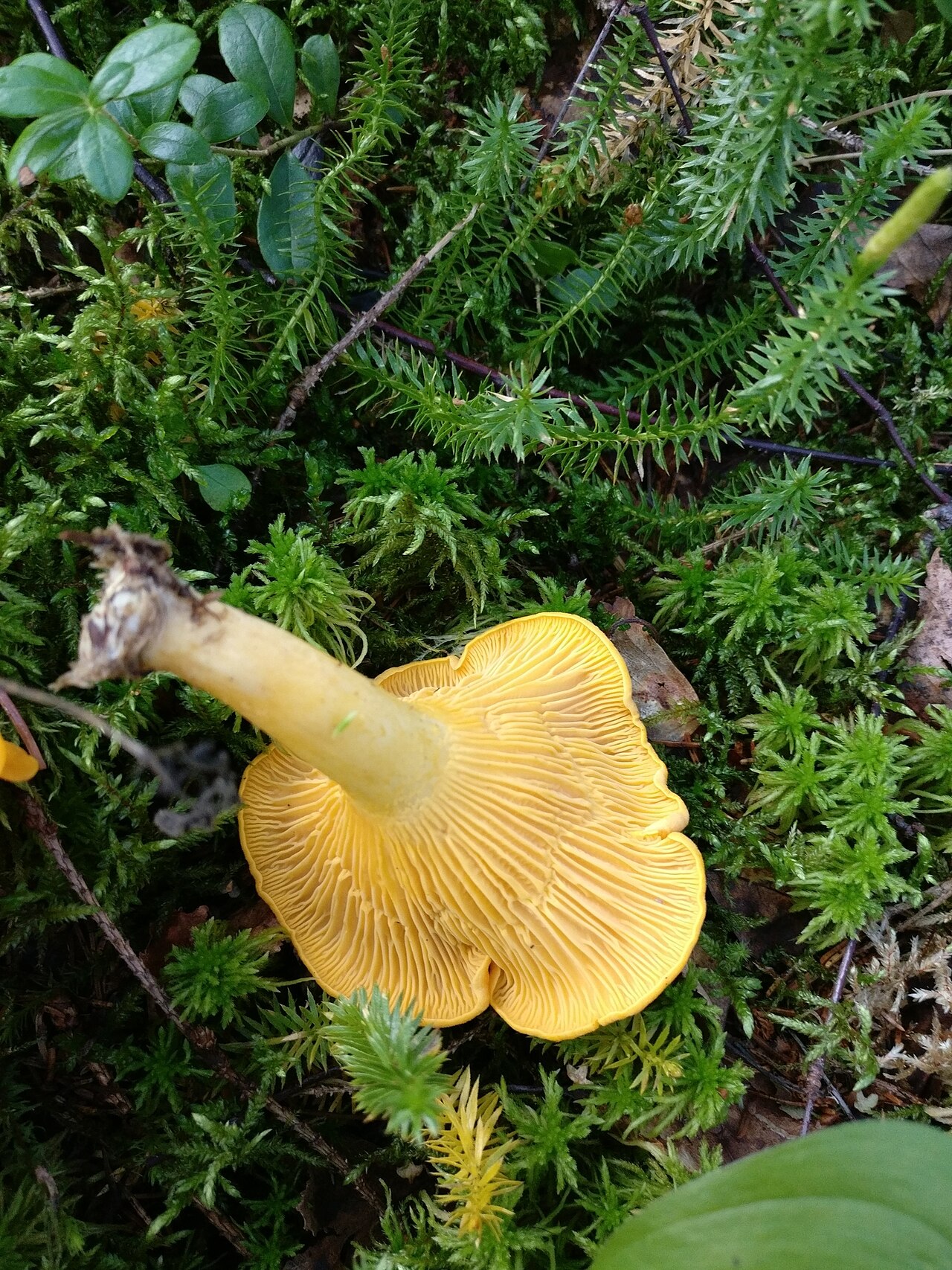
Golden chanterelle, type species of the Cantharellus genus.

muukalainen · CC0
Cantharellus cibarius, known as the golden chanterelle or girolle, is the type species of the genus Cantharellus. It is a commonly consumed and choice edible mushroom, though it can be confused with poisonous species such as Omphalotus illudens.
- field
- Mycology
- known_for
- Type species of the chanterelle genus; widely foraged edible mushroom
- distribution
- Europe, from Scandinavia to the Mediterranean Basin
- habitat
- Deciduous and coniferous forests, June to December
- color
- Yellow to dark yellow; red spots appear if damaged
- aroma
- Faint apricot-like aroma and flavor
Lore & Background
At one time, all yellow or golden chanterelles in North America were classified as Cantharellus cibarius. DNA analysis later revealed them to be a group of related species, now called the Cantharellus cibarius group or species complex, with C. cibarius sensu stricto restricted to Europe. Subsequent identifications included C. formosus in 1997, C. cibarius var. roseocanus in 1997, C. cascadensis in 2003, C. californicus in 2008, and C. anzutake in 2018 from Japan and Korea.
Reader's Guide
Cantharellus cibarius is significant as the type species of the chanterelle genus and as a widely recognized edible mushroom. Its description—body 3–15 cm wide, 5–10 cm tall, yellow to dark yellow, with red spots when damaged, and a faint apricot aroma—makes it easy to detect in nature. However, it can be confused with the poisonous Omphalotus illudens and the false chanterelle Hygrophoropsis aurantiaca. The species grows in Europe from Scandinavia to the Mediterranean Basin, typically from June to December, in deciduous and coniferous forests. It is commonly harvested from late summer to late fall and used in many culinary dishes. Watery specimens are more susceptible to rot, and preservation methods include drying or freezing, though oven drying is not recommended as it can make the mushroom bitter. The spore print is yellowish. Its legacy includes clarifying the taxonomy of North American chanterelles through DNA analysis, which split the single species into a complex of related species.
Did You Know?
- Cantharellus cibarius is the type species of the chanterelle genus Cantharellus.
- It can be confused with the poisonous Omphalotus illudens and the false chanterelle Hygrophoropsis aurantiaca.
- DNA analysis showed that all yellow chanterelles in North America were once classified as this species, but are now a group of related species.
- The mushroom has a faint aroma and flavor of apricots.
Taxonomic Odyssey
The smooth chanterelle's scientific identity has been a source of ongoing nomenclatural debate since its initial formal description. In 1822, American mycologist Lewis David de Schweinitz introduced the species as Thelephora cantharella, drawing on specimens gathered in Ohio. A decade and a half later, Elias Magnus Fries reassigned it to the genus Craterellus within his 1838 Epicrisis Systematis Mycologici. The most contentious episode came in 1856, when Miles Joseph Berkeley and Moses Ashley Curtis examined Schweinitz's material and substituted the epithet lateritius, yielding Craterellus lateritius. The reasoning behind this swap remains murky. In a 1979 analysis, Ronald H. Petersen speculated that Berkeley may have been unwilling to cede naming credit or wished to sidestep a tautonym, yet Berkeley's own 1873 publication—citing Alabama as the type locality rather than Ohio—undermines that reading. Petersen ultimately classified the name as a nomen novum. Because Schweinitz's holotype could never be recovered, nomenclatural rules elevated Berkeley's epithet to priority. Otto Kuntze briefly used Trombetta lateritia in 1891 before Rolf Singer placed the fungus in Cantharellus in 1951. The epithet lateritius, meaning 'bricklike,' alludes to the species' characteristically smooth spore-bearing surface.
Morphology and Distinguishing Features
Fruiting bodies of the smooth chanterelle present a striking visual profile: caps spanning two to twelve centimeters in diameter, their surfaces dry and faintly hairy, blazing in a deep orange-yellow that mellows with age. The margins, a lighter yellow, curl downward on younger specimens, and the overall silhouette trends from flattened to a pronounced funnel shape, reaching up to twelve centimeters in height. The stem is notably stout—between one and a half and ten centimeters long, half to two centimeters thick—cylindrical and tapering toward a sometimes whitish base, filled either with cottony mycelial tissue or solid flesh. The spore-bearing surface is the species' signature trait: initially perfectly smooth, it slowly develops faint channels and vein-like ridges no wider than a millimeter, all in a pale yellow flowing seamlessly into the stem. Spores are smooth and ellipsoid, roughly seven by five micrometers, producing a light yellow-orange deposit. Under the microscope, basidia are slightly club-shaped with thickened basal walls, and clamp connections thread through every hyphal region. The flesh is solid to partially hollow, pale yellow, and half to nine-tenths of a centimeter thick. In rare instances, up to three stems fuse at the base in a small cluster.
Distribution and Ecological Niche
The smooth chanterelle enjoys a surprisingly broad geographic footprint, occurring across North America, Africa, Malaysia, and the Himalayan foothills—specifically the Almora hills in Uttar Pradesh, India. In its North American range, fruiting bodies typically emerge between June and September, when their vivid yellow-to-orange caps stand out sharply against the soil in which they grow. Ecologically, the species forms ectomycorrhizal relationships, a symbiotic fungal partnership that anchors it to living soil rather than decaying organic matter. This soil-based habit is one of the key features that separates it from the poisonous Jack O'Lantern mushroom, Omphalotus olearius, which grows on decaying wood, sometimes buried, usually in large overlapping clusters with true gills bearing sharply defined edges. One author has proposed that C. lateritius may actually represent a species complex encompassing all chanterelles that share a completely smooth hymenophore, a sweet smell, and clamped hyphae—a hypothesis that, if confirmed, would expand the biological meaning behind the name far beyond the single taxon currently recognized. The species' bright coloration and ground-level habitat make it one of the more immediately conspicuous wild mushrooms in its native ranges.
Chemical Profile and Identification Challenges
Chemical analysis of the smooth chanterelle's fruiting bodies has revealed a carotenoid profile that is, by and large, indistinguishable from its close relatives. In a 1998 comparative study, researchers measured the carotenoid composition of C. lateritius alongside several other members of the genus Cantharellus, including C. cibarus, C. cibarius var. amythysteus, and C. tabernensis. The results showed that the carotenoid content across these species was virtually identical, dominated by γ-carotene, α-carotene, and β-carotene. The one notable exception was a significant quantity of an unidentified carotene present in C. lateritius, which the researchers hypothesized to be a breakdown product of β-carotene. This finding is noteworthy because carotenoids are the very pigments responsible for the mushroom's characteristic bright yellow-to-orange coloration, the same hues that make the fruiting bodies so conspicuous against the soil. The chemical near-identity among Cantharellus species also complicates identification: while the smooth chanterelle can be told apart from the golden chanterelle by its pinker hue, thicker flesh, and smoother hymenial surface, and from C. odoratus by the latter's thinner flesh and hollow stem, distinguishing it from C. flavolateritius demands microscopy or DNA analysis. Chemical composition alone, therefore, is not a reliable taxonomic tool within this group.
Gallery
Frequently Asked Questions
What is Cantharellus cibarius?
It is the golden chanterelle, a prized edible mushroom that serves as the type species for the entire Cantharellus genus. It is one of the most widely foraged and celebrated fungi in European cuisine.
Where and when can you find Cantharellus cibarius?
This species fruits in both deciduous and coniferous woodlands across Europe, stretching from Scandinavia down to the Mediterranean Basin. Its season generally runs from June through December.
How do you identify a Cantharellus cibarius in the wild?
The cap is yellow to dark yellow, and the flesh reveals characteristic red spots where it has been bruised or damaged. A faint apricot-like aroma and flavor further help confirm the identification.
Is Cantharellus cibarius safe to eat?
Yes, it is a commonly consumed and highly regarded edible mushroom, but foragers must be cautious because it can be confused with toxic species such as Omphalotus illudens. Careful identification is essential before harvesting.
Why is Cantharellus cibarius important in mycology?
As the type species of the Cantharellus genus, it provides the taxonomic benchmark against which all other chanterelle species are defined and compared. Its well-known morphology and long culinary history make it a cornerstone reference in fungal studies.
More in Fungi And Fungus-Like Organisms 1-24
Spotted an error? Know more?
This is a living reference — every entry is fact-audited, and reader corrections feed straight into our audit queue. Suggest an edit · See this site's audit record