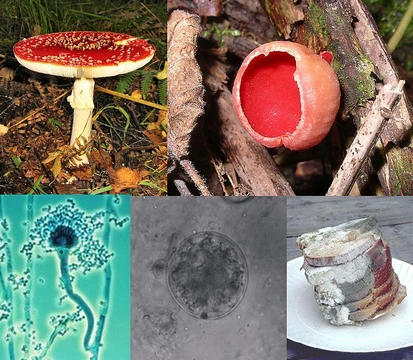
Chytridiomycota
Early-diverging fungi with flagellated zoospores, including amphibian pathogens.

M. Piepenbring, correction: User:Selso · CC BY-SA 4.0
Chytridiomycota, commonly called chytrids, are a group of zoospore-producing organisms that belong to the fungal kingdom. Their name comes from an ancient Greek word for "little pot," which describes the pouch that holds their unreleased zoospores. As one of the earliest branches to split off from the fungal family tree, chytrids are firmly placed in the kingdom Fungi because they have chitin in their cell walls, a single whip-like flagellum at the rear, get nutrients by absorbing them, store energy as glycogen, and make lysine through the α-amino adipic acid pathway. These fungi break down tough materials like chitin and keratin as saprobes, and some live as parasites. Interest in chytrids jumped dramatically after the discovery of *Batrachochytrium dendrobatidis*, the fungus behind chytridiomycosis.
- classification
- Division of zoosporic organisms in kingdom Fungi
- known_for
- Causing chytridiomycosis in amphibians via Batrachochytrium dendrobatidis
- habitat
- Aquatic and terrestrial, including periglacial soils
- reproduction
- Asexual via zoospores; sexual via various methods including oogamy
- number_of_species
- Over 750 in class Chytridiomycetes alone
- key_trait
- Reproduce with zoospores, unusual among Fungi
Lore & Background
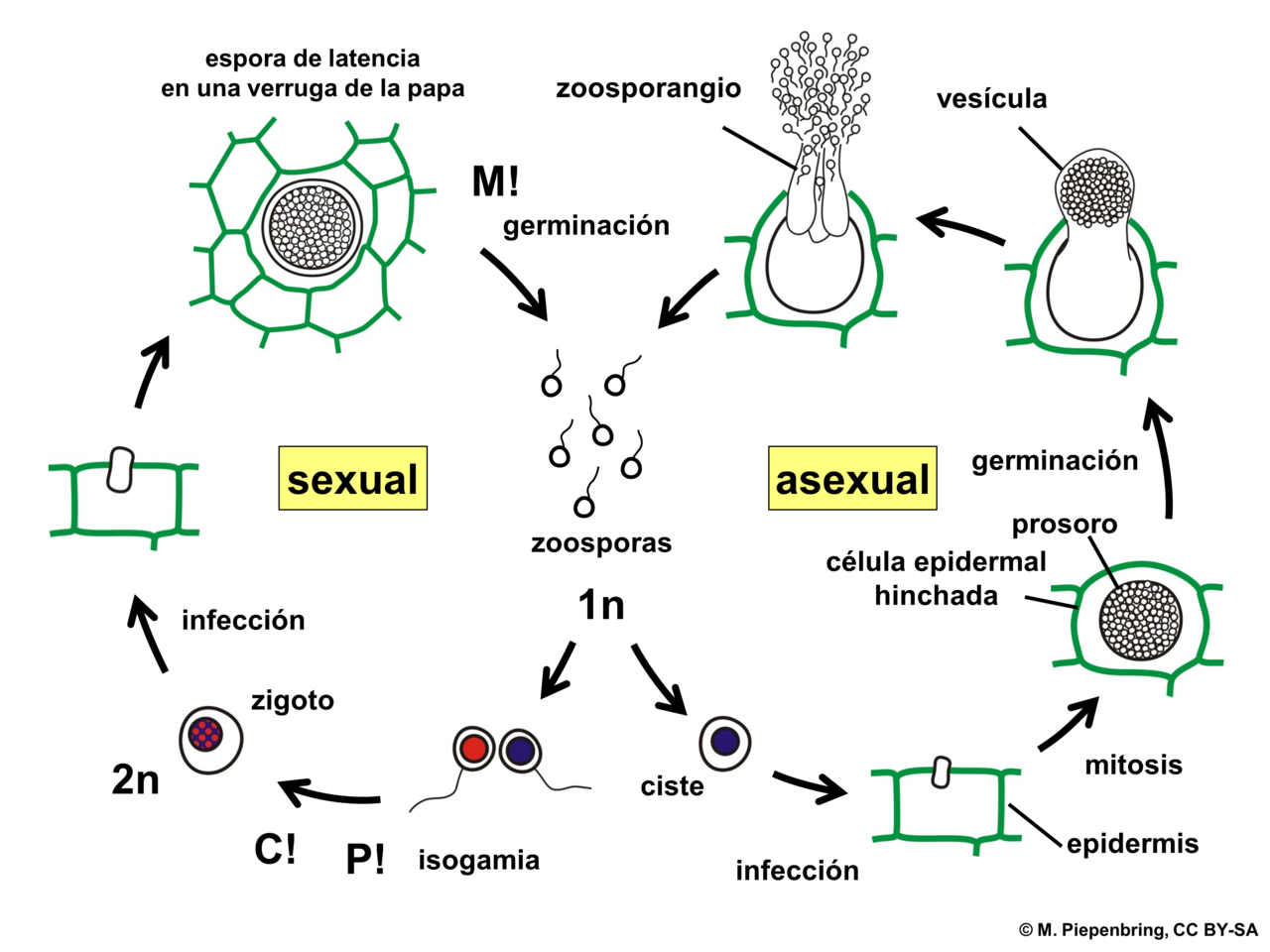
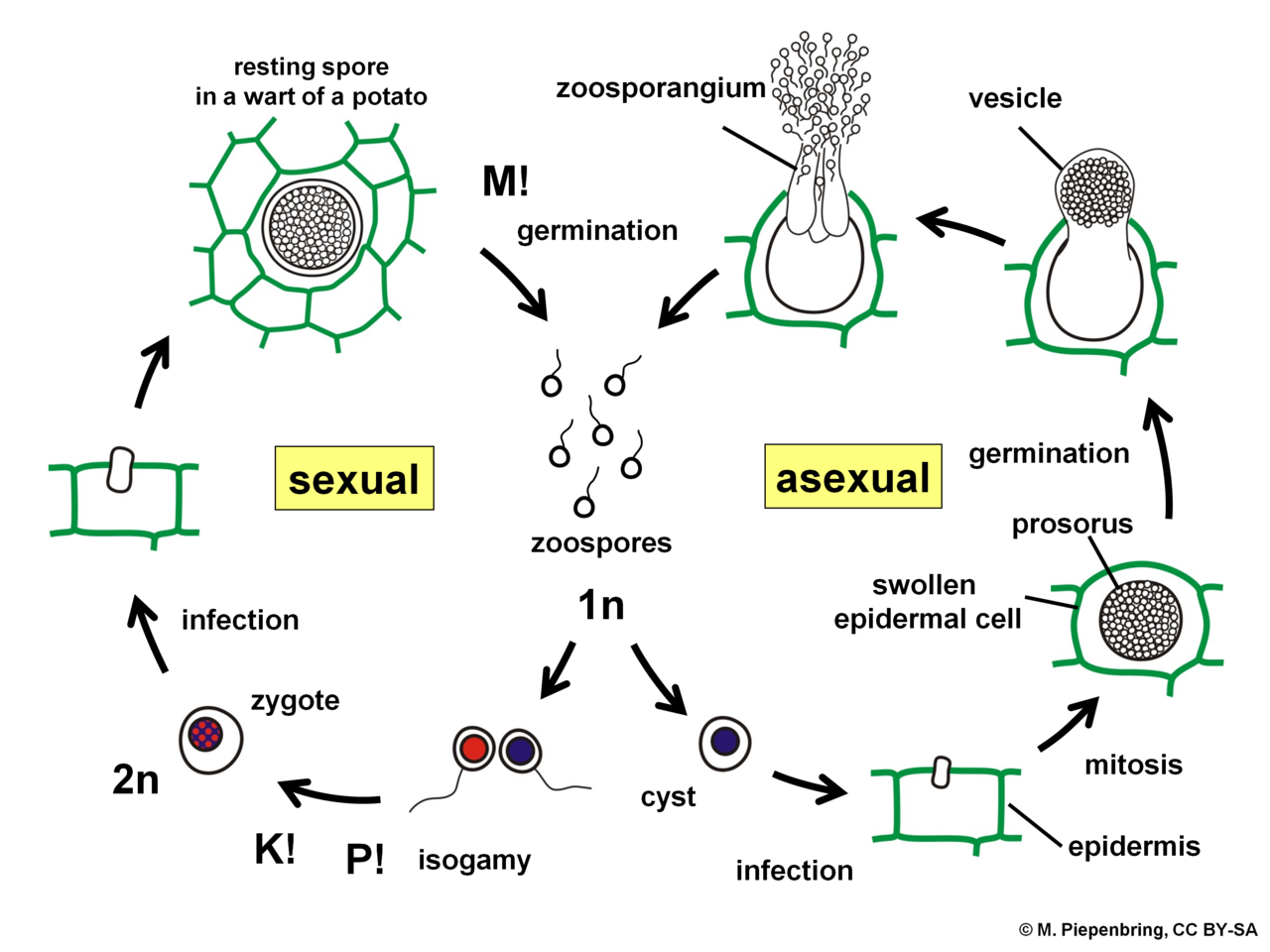
Chytridiomycota are unusual among the Fungi in that they reproduce with zoospores. For most members, sexual reproduction is not known; asexual reproduction occurs through the release of zoospores derived through mitosis. Where sexual reproduction has been described, it occurs via a variety of methods, including fusion of isogametes (as in Synchytrium), oogamy in some algal parasites, fusion of thalli tubes, or fusion of rhizoids. The resulting zygote forms a resting spore that survives adverse conditions. Sexual reproduction is common and well-known among Monoblepharidomycetes, which practice a version of oogamy—the first occurrence of oogamy in kingdom Fungi.
Reader's Guide
Chytridiomycota hold significant ecological and scientific importance. As one of the earliest diverging fungal lineages, they provide insight into the evolution of fungi and the transition from aquatic to terrestrial life. Their role as saprobes in degrading refractory materials like chitin and keratin contributes to nutrient cycling in aquatic and soil ecosystems. Parasitic chytrids, particularly Batrachochytrium dendrobatidis, have been implicated in the worldwide decline of amphibians, including the extinction of the golden toad and the presumed extinction of the southern and northern gastric brooding frogs. This disease, chytridiomycosis, is thought to kill amphibians by causing loss of essential ions through pores made in epidermal cells. Recent research suggests elevating salt levels may cure chytridiomycosis in some Australian frog species. Chytrids also infect algae and other microbes, controlling primary production in lakes and affecting food webs. Their taxonomy has been revised with molecular data and ultrastructure analysis, leading to the reclassification of several groups into separate phyla (Blastocladiomycota, Neocallimastigomycota, Olpidiomycota). The discovery of cryptic diversity beneath morphospecies has challenged earlier assumptions of ubiquity.
Did You Know?
- The name 'chytrid' comes from the Ancient Greek word for 'little pot,' referring to the structure containing unreleased zoospores.
- Chytrids are one of the earliest diverging fungal lineages and reproduce with zoospores, which is unusual among Fungi.
- Batrachochytrium dendrobatidis, a chytrid, causes chytridiomycosis and has been linked to the extinction of the golden toad and the presumed extinction of two gastric brooding frog species.
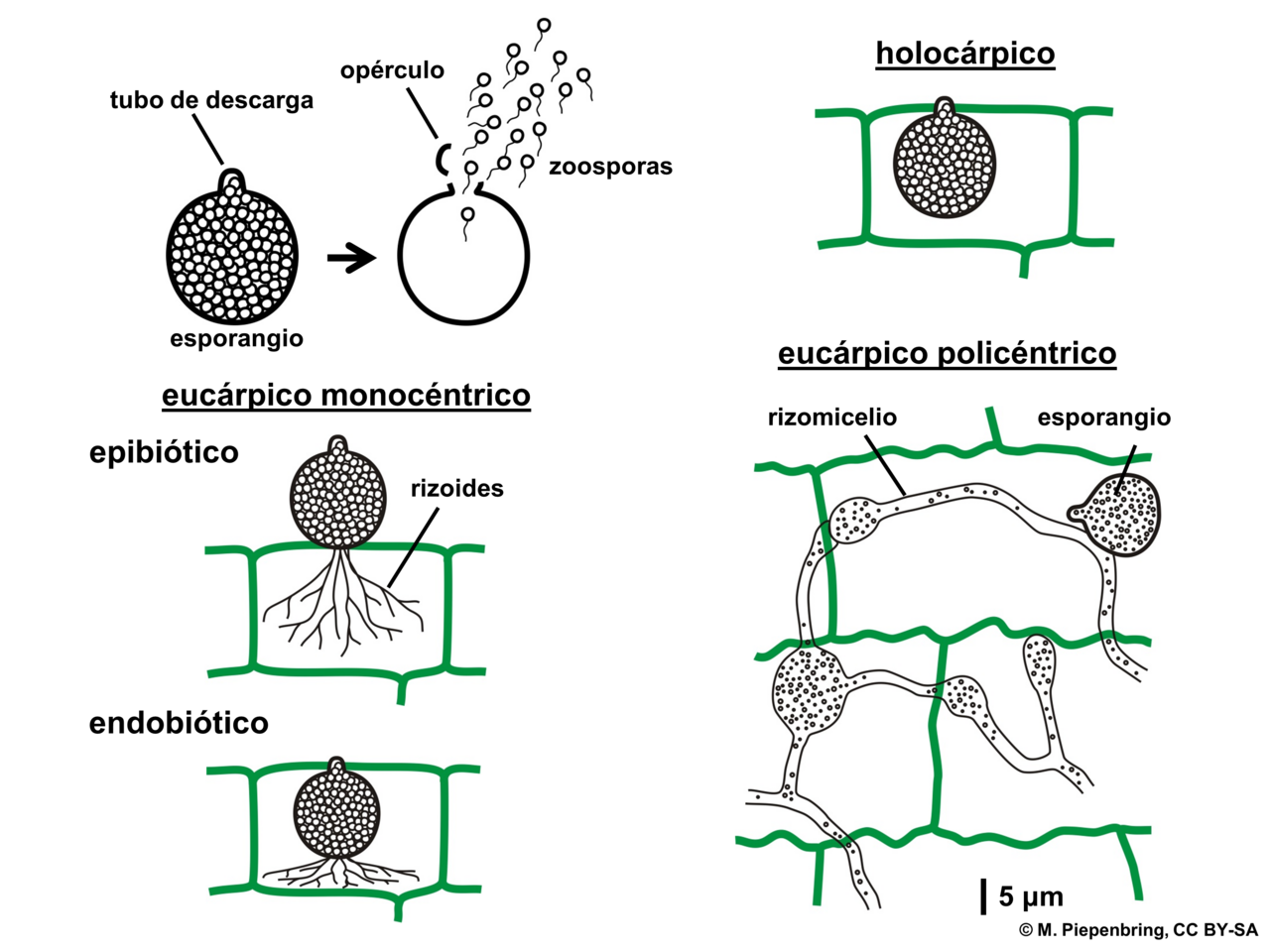
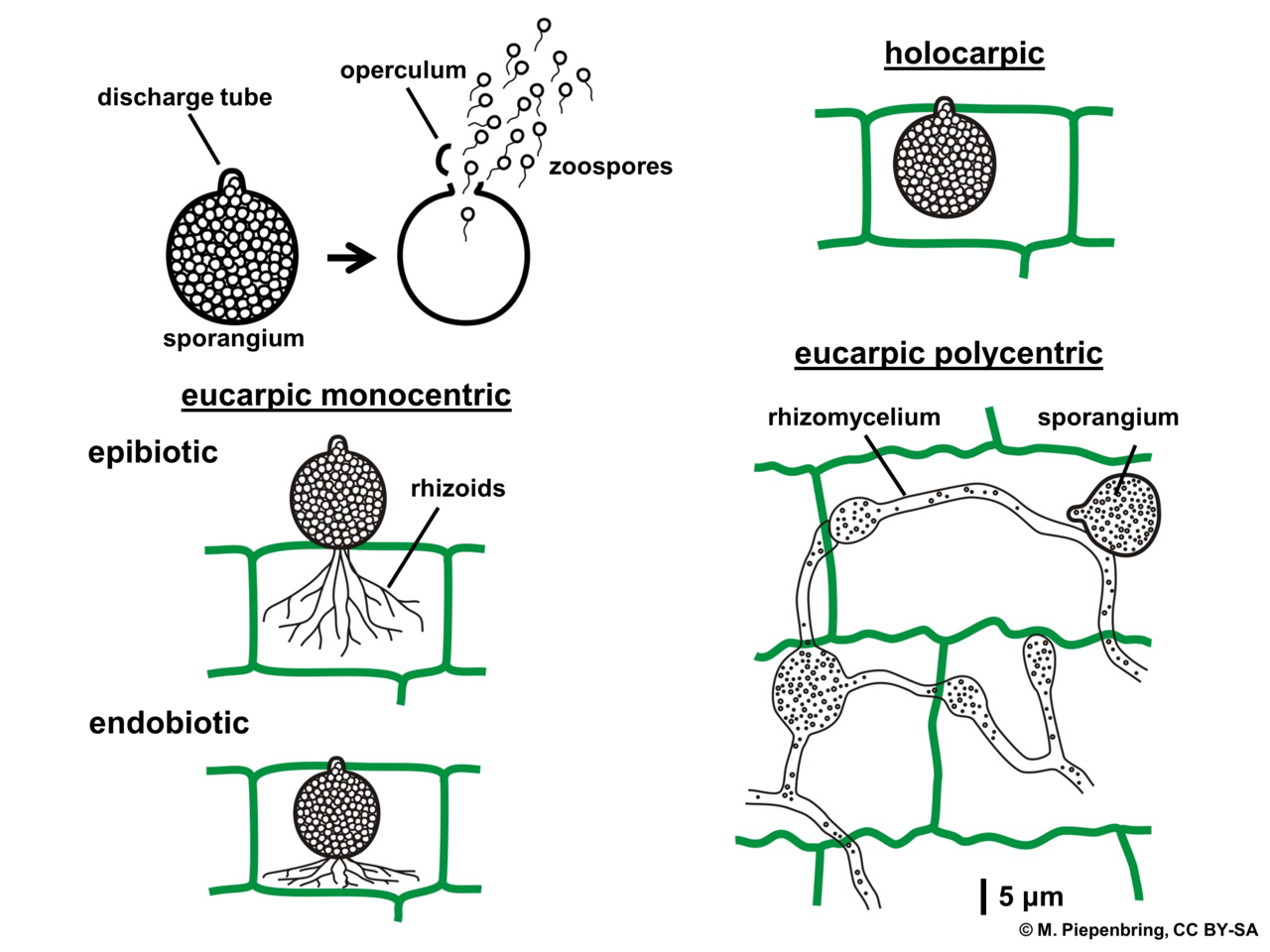
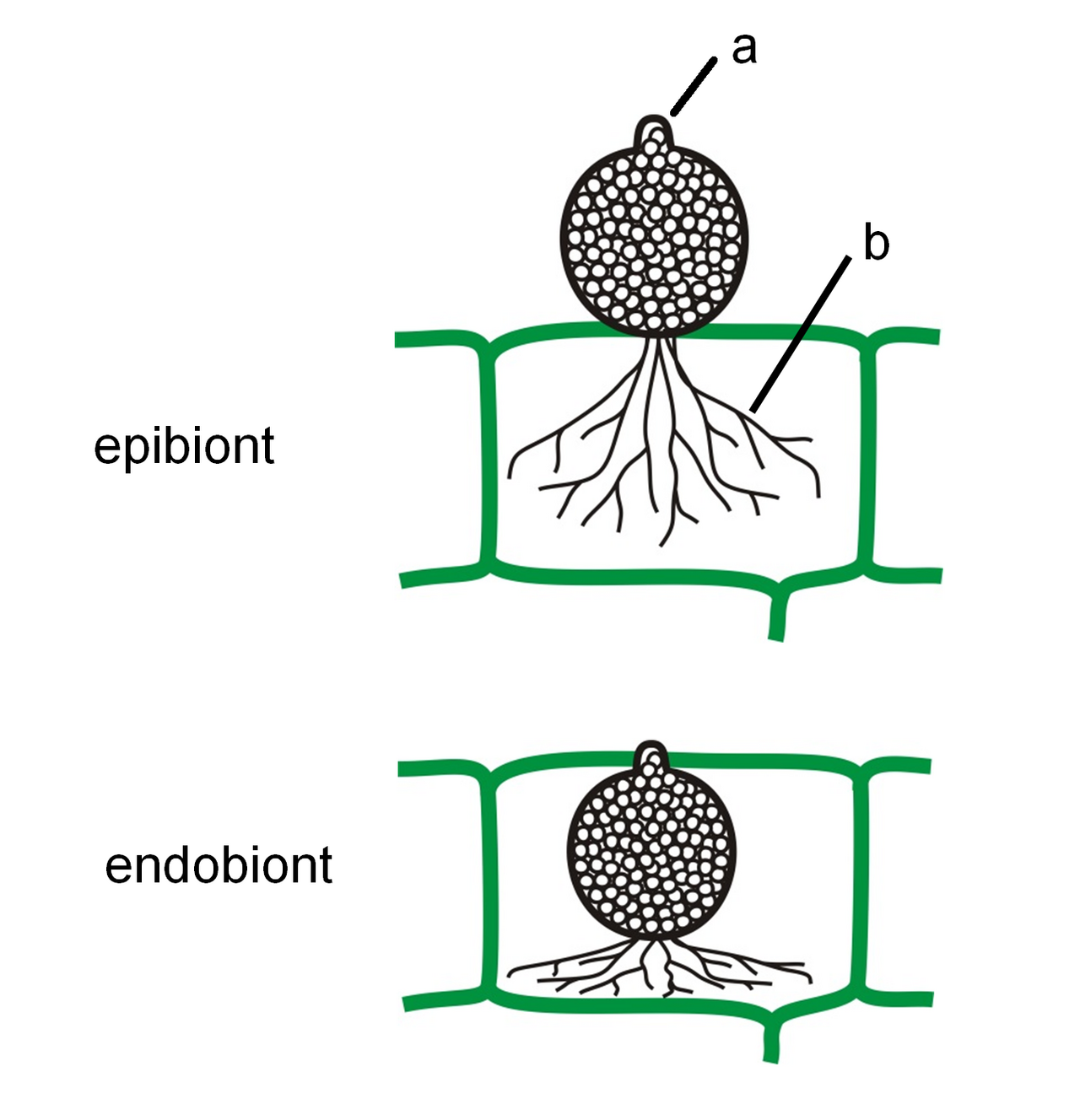
- Some chytrids are holocarpic (producing only a zoosporangium and zoospores), while others are eucarpic (producing additional structures like rhizoids).
Taxonomy and the Challenge of Classification
Chytrids have long resisted neat taxonomic placement. For much of their scientific history, researchers attempted to sort species by observable traits—developmental patterns, body morphology, the type of substrate they colonized, and the mechanics of zoospore release. Yet when individual spores are isolated and grown under controlled conditions, these very features prove remarkably variable, rendering them unreliable as diagnostic characters. Modern chytrid taxonomy therefore leans heavily on molecular data, supplemented by detailed ultrastructural examination of zoospores and certain aspects of thallus development. The group's classificatory history is also tangled: chytrids were once nested within the broad class Phycomycetes, then reorganized under Mastigomycotina, and at one point even grouped with the Protoctista before being firmly re-established as fungi. Today, the division encompasses the class Chytridiomycetes (over 750 species across ten orders), the Monoblepharidomycetes (two orders), and the Hyaloraphidiomycetes (a single order), while related lineages such as the oomycetes and Hyphochytriomycetes have been excised as heterokont pseudofungi rather than true fungi.
Reproduction and the Zoospore Life Cycle
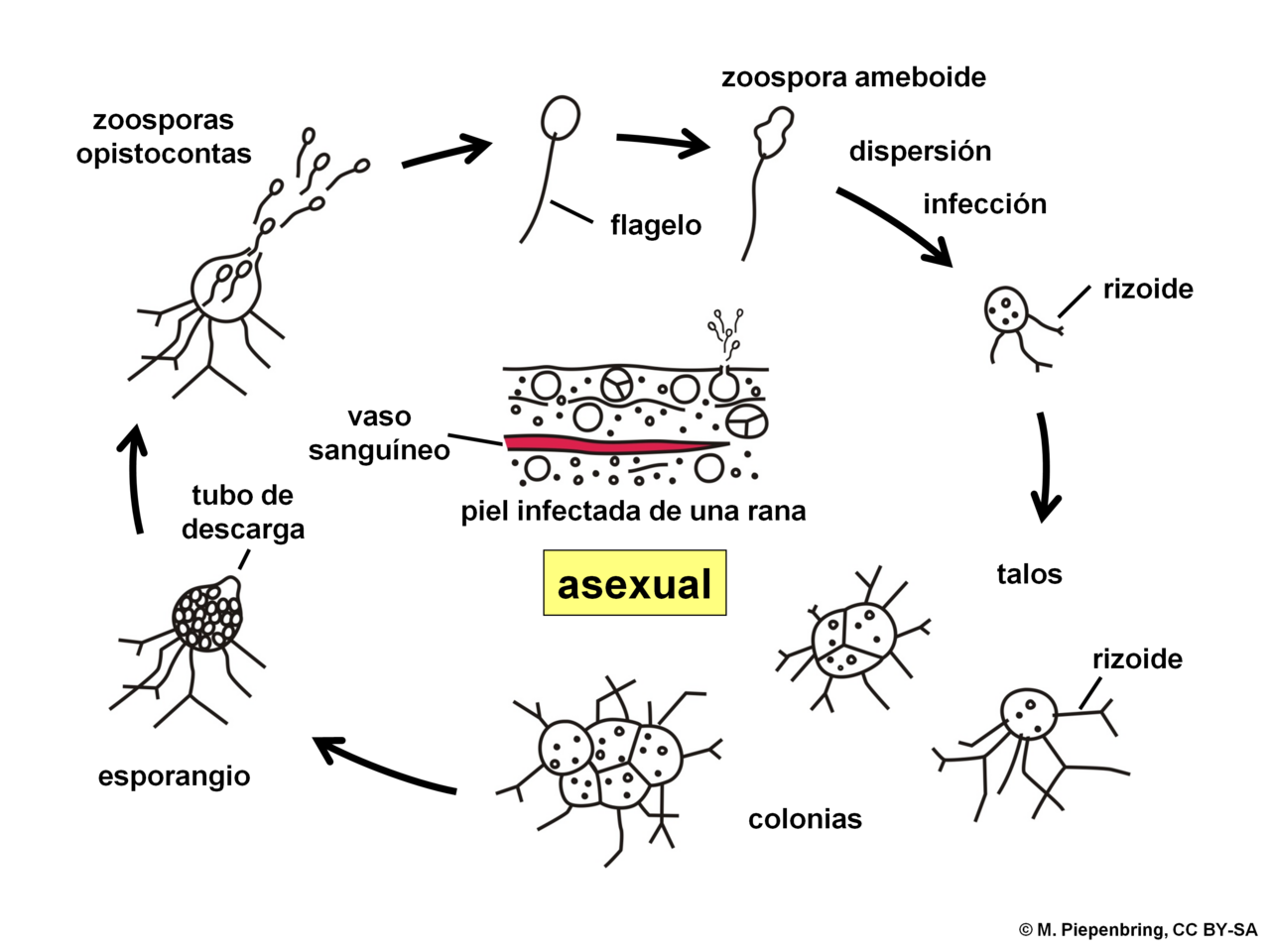
Among all fungi, chytrids stand apart because they generate motile, flagellated zoospores as their primary reproductive vehicle. For the majority of species, sexual reproduction remains undocumented, and asexual propagation proceeds through mitotically derived zoospores released from a sporangium. Where sexual processes have been characterized, they display striking diversity: some chytrids fuse isogametes of identical size and shape, a strategy seen in the plant-pathogenic genus Synchytrium; others practice a form of oogamy in which a motile male gamete seeks out a stationary female structure; and still others bring two thalli into contact via fusing tubes or rhizoids so that nuclei can migrate and unite. The resulting zygote invariably matures into a resting spore, a dormant stage that carries the organism through unfavorable conditions. The Monoblepharidomycetes are particularly notable for their well-developed oogamy—oogonia producing eggs and antheridia producing motile sperm—representing the earliest known occurrence of this mode within the fungal kingdom. After a resting spore germinates, the emerging zoospore navigates its immediate aquatic environment by chemotaxis or phototaxis, locates a suitable substrate, encysts, and germinates into a new coenocytic thallus. Release mechanisms vary from operculate, where a lid-like operculum detaches, to inoperculate, where zoospores exit through pores, slits, or papillae.
Ecology, Saproby, and the Chytridiomycosis Wake-Up Call
Chytrids are fundamentally aquatic organisms, though populations thriving in the thin capillary films of water surrounding soil particles are often treated as terrestrial. Their zoospores are not long-distance dispersal tools; rather, they serve as a means of thoroughly probing a small volume of water for a viable substrate. Isolated from peat bogs, rivers, ponds, springs, and ditches, chytrids occupy roles as saprobes—breaking down tough, refractory biological materials such as chitin and keratin—and occasionally as parasites of other organisms. The name 'chytrid' itself derives from the Ancient Greek word for 'little pot,' a reference to the sporangial structure that houses unreleased zoospores, a fitting image for organisms that spend much of their life cycle sealed within microscopic chambers. The group's ecological profile shifted dramatically in public consciousness with the identification of Batrachochytrium dendrobatidis as the causal agent of chytridiomycosis, a devastating amphibian disease. That discovery triggered a substantial surge in research attention directed at chytrids broadly, transforming a relatively obscure fungal division into a subject of urgent conservation and medical interest.
Phylogenetic Depth and the Fragmentation of the Group
Chytrids occupy a position of exceptional evolutionary interest as one of the earliest-diverging lineages within the fungal kingdom. Their placement among true fungi is supported by a constellation of shared traits: chitin-based cell walls, a single posterior whiplash flagellum on the zoospore, absorptive nutrition, storage of energy as glycogen, and the synthesis of the amino acid lysine via the α-amino adipic acid pathway. Despite this deep fungal heritage, the group has been repeatedly reorganized as molecular phylogenetics and ultrastructural analysis have revealed that what was once treated as a single class is actually a mosaic of distinct lineages. The Blastocladiales were elevated to their own phylum, Blastocladiomycota; the anaerobic Neocallimastigales—organisms that inhabit the digestive tracts of herbivores—were raised to Neocallimastigomycota; and the Olpidiaceae, represented by the type genus Olpidium, were separated into the phylum Olpidiomycota. Each of these splits underscores how much remains to be understood about the true breadth and diversity of zoosporic fungi and their relationships to one another.
Gallery
Frequently Asked Questions
What are Chytridiomycota?
Chytridiomycota is a division of the fungal kingdom whose members produce motile, flagellated spores known as zoospores. The name traces back to an old Greek word meaning 'small pot,' a nod to the sac-like structure that cradles their spores before they are set free. They sit near the very base of the fungal family tree, making them one of the oldest lineages still recognized within Fungi.
What makes chytrids different from 'regular' fungi?
Chytrids are unusual among fungi because they release swimming spores bearing a single trailing flagellum, giving them a motility most other fungi simply lack. They still qualify as true fungi, though: their cell walls contain chitin, they absorb nutrients rather than photosynthesize, they store energy as glycogen, and they synthesize lysine via the α-amino adipic acid pathway.
What is Batrachochytrium dendrobatidis and why does it matter?
B. dendrobatidis is a chytrid species responsible for chytridiomycosis, a deadly skin infection that has devastated frog and salamander populations on every continent where it has been detected. It has become one of the most cited organisms in conservation biology because of its outsized role in amphibian declines worldwide.
Where do chytrids live?
Chytrids occupy both aquatic and terrestrial niches, from freshwater streams and ponds to periglacial soils in cold, polar regions. Their ability to thrive in such varied environments highlights how ecologically versatile this ancient fungal group is.
How do chytrids reproduce?
Their hallmark asexual strategy is the release of free-swimming zoospores, a mode of dispersal that is rare in the fungal kingdom. Sexual reproduction, where it occurs, can take several forms including oogamy, though the precise mechanisms differ from one species to another.
More in Fungi And Fungus-Like Organisms 1-24
Spotted an error? Know more?
This is a living reference — every entry is fact-audited, and reader corrections feed straight into our audit queue. Suggest an edit · See this site's audit record